 Spanish
  English
  French
  Japanese
  Korean
  Vietnamese
  Thai
Thai  Portuguese
  German
Titanium metal alloy has become one of the most trusted engineering materials for industries that require exceptional strength, lightweight performance, and long-term reliability. Its outstanding mechanical properties make it suitable for manufacturing critical components that operate under demanding conditions.
Unlike conventional metals, titanium alloys offer an excellent combination of corrosion resistance, high strength, and thermal stability. These advantages allow manufacturers to improve product performance while reducing maintenance requirements and extending equipment service life.
However, selecting the correct titanium metal alloy is not simply about choosing the strongest material. Different alloy grades provide unique characteristics that directly influence machining, welding, fatigue resistance, and application performance.
This guide explains titanium metal alloy classifications, common grades, manufacturing forms, industrial applications, performance characteristics, and practical selection criteria to help buyers choose the right alloy for their specific engineering requirements.
Quick Answer
Titanium metal alloy is a high-performance engineering material that combines exceptional strength, lightweight construction, and outstanding corrosion resistance. Different titanium alloy grades are developed for specific industrial applications, making proper grade selection essential for maximizing performance, manufacturing efficiency, and long-term reliability.
Key Takeaways
- Titanium alloys offer an excellent strength-to-weight ratio.
- Different alloy families provide unique mechanical properties.
- Grade 5 titanium is the most widely used engineering alloy.
- Corrosion resistance makes titanium suitable for harsh environments.
- Proper grade selection improves product performance and service life.
- Titanium alloys are available in bars, plates, sheets, rods, wires, and powders.
- Aerospace, medical, marine, and chemical industries rely heavily on titanium alloys.
What is Titanium Metal Alloy?
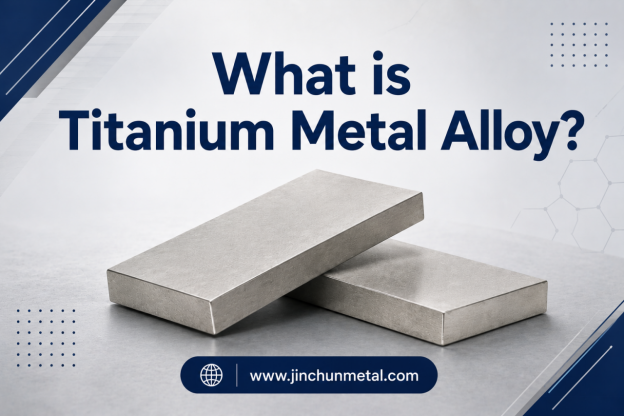
Titanium alloy is an advanced engineering material made by combining titanium with alloying elements such as aluminum, vanadium, molybdenum, or tin. This combination improves strength, corrosion resistance, heat resistance, and overall mechanical performance.
Compared with conventional engineering metals, titanium alloys provide an excellent strength-to-weight ratio while maintaining exceptional durability. These properties make them suitable for demanding applications that require reliable performance under harsh operating conditions.
Today, titanium alloys are widely used in aerospace, medical, marine, chemical processing, energy, and automotive industries. Different alloy grades are specifically developed to meet various manufacturing processes, environmental conditions, and engineering requirements.
Discover more about advanced powder materials in our Top 7 Titanium Powder Manufacturers in China guide
Types of Titanium Metal Alloys
Titanium alloys are classified into different categories based on their microstructure, composition, and mechanical properties for specific engineering applications.
1: Alpha Titanium Alloys
Alpha titanium alloys contain alpha-stabilizing elements that provide excellent corrosion resistance, weldability, and high-temperature stability. They are commonly used in marine equipment, chemical processing plants, and heat-resistant industrial components.
2: Near-Alpha Titanium Alloys
Near-alpha titanium alloys combine strong creep resistance with excellent thermal stability. These alloys are widely selected for aircraft engine components and aerospace structures operating under elevated temperatures.
3: Alpha-Beta Titanium Alloys
Alpha-beta titanium alloys offer an excellent balance of strength, toughness, fatigue resistance, and machinability. Grade 5 titanium belongs to this category and is widely used across aerospace, medical, and industrial manufacturing.
4: Beta Titanium Alloys
Beta titanium alloys provide outstanding strength, excellent formability, and superior fatigue resistance. They are preferred for advanced aerospace components, medical devices, and high-performance engineering applications requiring maximum mechanical performance.
Titanium Metal Alloy Manufacturing Process
Titanium alloy manufacturing requires precise production techniques to achieve consistent chemical composition, excellent mechanical properties, and reliable quality. Every production stage influences the alloy’s final industrial performance and durability.
- Raw Material Selection: High-purity titanium and alloying elements are carefully selected to ensure consistent chemical composition and superior material quality.
- Vacuum Melting:Raw materials are melted under vacuum conditions to eliminate contamination and produce a clean, homogeneous alloy structure.
- Hot Working Process: The alloy undergoes forging or rolling to refine grain structure, improve strength, and enhance overall mechanical performance.
- Heat Treatment: Controlled heating and cooling optimize hardness, toughness, fatigue resistance, and dimensional stability for specific engineering applications.
- Quality Inspection:Chemical analysis, mechanical testing, dimensional inspection, and surface evaluation verify compliance with international standards and customer specifications.
A well-controlled manufacturing process ensures consistent quality throughout production. To understand another important alloy material, explore our guide on Ferro Titanium Powder for Alloy Production Worldwide
Key Properties of Titanium Metal Alloys
Titanium alloys are valued for their outstanding mechanical and chemical properties. These characteristics make them suitable for demanding industries requiring long-term reliability and exceptional performance.
| Property | Typical Performance | Industrial Benefit |
| Density | Low density | Reduces overall component weight |
| Tensile Strength | Very high | Handles heavy mechanical loads |
| Corrosion Resistance | Excellent | Extends equipment service life |
| Heat Resistance | High temperature stability | Performs in demanding environments |
| Fatigue Resistance | Outstanding | Improves durability under repeated stress |
| Biocompatibility | Excellent | Suitable for medical implants |
The combination of these properties allows titanium alloys to outperform many traditional engineering materials in aerospace, medical, marine, and industrial applications.
Industrial Applications of Titanium Metal Alloys
Titanium alloys support numerous industries by providing exceptional strength, corrosion resistance, lightweight performance, and reliable durability in demanding environments.
Aerospace Industry
Titanium alloys are widely used for aircraft structures, engine components, landing gear, and fasteners. Their high strength-to-weight ratio improves fuel efficiency while maintaining excellent structural reliability and fatigue resistance.
Medical Industry
Medical manufacturers use titanium alloys to produce orthopedic implants, dental implants, surgical instruments, and spinal fixation devices. Their excellent biocompatibility and corrosion resistance ensure long-term safety and dependable performance.
Chemical Processing Industry
Titanium alloys are ideal for reactors, heat exchangers, storage tanks, valves, and piping systems. Their superior resistance to aggressive chemicals reduces maintenance requirements and extends equipment operating life.
Marine Industry
Marine engineers select titanium alloys for seawater piping, desalination systems, offshore platforms, and ship components. Their outstanding resistance to saltwater corrosion ensures reliable performance in harsh marine environments.
Energy Industry
Power plants, nuclear facilities, hydrogen systems, and renewable energy projects utilize titanium alloys for components exposed to high temperatures, pressure, and corrosive operating conditions.
Explore our guide on Chromium Nitride Powder for Industrial Applications to learn about another high-performance material used in advanced engineering and manufacturing industries
Selecting the Right Titanium Alloy for Engineering Projects
Engineers carefully evaluate performance requirements before selecting titanium alloys for industrial projects. Matching the correct alloy with the application improves reliability, efficiency, durability, and long-term operational performance.
| Aplicación | Recommended Titanium Alloy | Reason for Selection |
| Aerospace Components | Grade 5 (Ti-6Al-4V) | High strength, fatigue resistance, and lightweight performance |
| Medical Implants | Grade 23 (Ti-6Al-4V ELI) | Excellent biocompatibility and long-term reliability |
| Chemical Processing Equipment | Grade 7 | Outstanding corrosion resistance in aggressive chemical environments |
| Marine Engineering | Grade 2 | Excellent seawater corrosion resistance and weldability |
| Heat Exchangers | Grade 1 | Superior corrosion resistance and excellent formability |
| High-Temperature Applications | Near-Alpha Alloys | Stable mechanical properties at elevated temperatures |
Selecting titanium alloys according to engineering requirements ensures better performance, improved manufacturing efficiency, and longer service life. Proper material selection also reduces maintenance costs and enhances overall product reliability.
Titanium Metal Alloy vs Pure Titanium
Although both materials provide excellent corrosion resistance, titanium alloys deliver higher mechanical performance because alloying elements improve strength, hardness, and fatigue resistance for demanding engineering applications.
| Feature | Titanium Metal Alloy | Pure Titanium |
| Strength | Very High | Moderate |
| Weight | Lightweight | Lightweight |
| Corrosion Resistance | Excellent | Excellent |
| Machinability | Good | Better |
| Heat Resistance | Higher | Moderate |
| Typical Applications | Aerospace, Medical, Industrial | Chemical Processing, Marine |
Titanium alloys are generally selected when maximum strength and durability are required, while pure titanium is preferred for applications emphasizing corrosion resistance and excellent formability.
International Standards for Titanium Metal Alloys
International buyers should also reference ISO standards for titanium and titanium alloys to ensure consistent quality and global compliance.
International standards ensure titanium alloys meet strict quality, safety, and performance requirements. Certified materials provide consistent chemical composition, reliable mechanical properties, and dependable performance across demanding industrial applications.
- ASTM Standards:ASTM specifications define material composition, mechanical properties, testing methods, and quality requirements for various titanium alloy grades.
- ISO Standards:ISO standards ensure consistent manufacturing practices, quality management, and internationally recognized performance requirements for titanium metal alloy production.
- AMS Specifications:Aerospace Material Specifications establish strict requirements for titanium alloys used in aircraft, aerospace components, and other high-performance engineering applications.
- Material Certification:Certified titanium alloys include inspection reports, chemical analysis, mechanical testing results, and complete traceability to verify product quality and compliance.
- Industry Compliance:Compliance with international standards helps manufacturers improve product reliability, simplify global procurement, and satisfy customer requirements across diverse industrial markets.
Selecting titanium alloys that comply with recognized international standards helps reduce procurement risks, improve product consistency, and ensure reliable performance for aerospace, medical, marine, and industrial engineering applications.
Buyers should review ASTM titanium material standards before selecting a grade for industrial applications.
Step-by-Step Guide to Choose the Right Titanium Metal Alloy Grade
Choosing the correct titanium alloy grade requires evaluating technical requirements, operating conditions, manufacturing methods, and supplier capabilities before purchasing.
You may also find our guide on Step-by-Step B2B Guide: How to Import Brass Metal Powder helpful when comparing industrial metal materials
1: Define the Application
Identify the intended application before selecting a titanium alloy. Different industries require specific grades based on strength, corrosion resistance, heat tolerance, and long-term mechanical performance requirements.
2: Evaluate the Operating Environment
Analyze whether the alloy will operate in seawater, chemicals, high temperatures, or heavy-load environments. Environmental conditions significantly influence corrosion resistance, durability, and overall service life.
3: Check Mechanical Properties
Review tensile strength, yield strength, hardness, and fatigue resistance before purchasing. Matching mechanical properties with operational demands improves product reliability and minimizes future maintenance requirements.
4: Select the Right Manufacturing Method
Choose a titanium alloy compatible with machining, welding, forging, casting, or additive manufacturing. Proper material selection improves production efficiency while maintaining consistent component quality and accuracy.
5: Verify Material Certifications
Confirm chemical composition, mechanical testing reports, and international certifications before ordering. Certified titanium alloys ensure quality consistency, product traceability, and compliance with industry standards and specifications.
6: Compare Available Titanium Grades
Compare different titanium grades according to application requirements, corrosion resistance, mechanical performance, and fabrication characteristics. Selecting the most suitable grade maximizes efficiency and long-term operational reliability.
7: Choose a Trusted Manufacturer
Partner with an experienced titanium alloy manufacturer offering strict quality inspection, customized specifications, stable production capacity, and professional technical support for reliable long-term material supply.
You can also compare titanium with other advanced materials in our Titanium Carbide vs Tungsten Carbide: Which Material Is Right for Your Industry?
Future Trends in Titanium Metal Alloy Applications
Titanium alloy applications continue expanding as industries demand stronger, lighter, and more durable materials. Emerging technologies are creating new opportunities across aerospace, healthcare, energy, and advanced manufacturing sectors.
- Growth in Additive Manufacturing:Titanium alloys are increasingly used in metal 3D printing to produce lightweight, complex, and high-precision components with reduced material waste.
- Expansion of Aerospace Applications:Modern aircraft and spacecraft manufacturers continue adopting titanium alloys to improve fuel efficiency, structural strength, and long-term operational performance.
- Rising Demand in Medical Technology:Advanced medical implants and surgical devices increasingly rely on titanium alloys because of their excellent biocompatibility, strength, and corrosion resistance.
- Increasing Adoption in Clean Energy:Hydrogen production, offshore wind, and advanced power systems are driving demand for titanium alloys that withstand corrosive and high-temperature operating environments.
- Development of High-Performance Industrial Alloys:Manufacturers continue developing new titanium alloy grades with improved strength, heat resistance, and machinability to support evolving engineering and industrial requirements.
Future innovations will continue expanding titanium alloy applications across multiple industries. Manufacturers investing in advanced materials and quality production will remain competitive as global engineering requirements continue evolving.
Why Choose Chengdu Jinchun Metallic Materials Co., Ltd. for Titanium Metal Alloys
Chengdu Jinchun Metallic Materials Co. is a trusted manufacturer specializing in high-quality titanium alloys for aerospace, medical, marine, chemical processing, and industrial engineering applications worldwide.
We manufacture high-purity titanium metal alloys for reliable performance across demanding industrial and engineering applications worldwide.
Every titanium alloy undergoes comprehensive inspection, ensuring consistent quality, accurate composition, and dependable mechanical performance before delivery.
We provide customized titanium alloy grades, dimensions, and product forms to meet diverse customer manufacturing requirements.
Modern production equipment and experienced engineers ensure stable manufacturing processes with consistent product quality and precision.
Efficient production capacity, professional technical support, and timely worldwide delivery help customers maintain stable long-term material sourcing.
Final Thoughts
Titanium metal alloys have become essential engineering materials because they combine outstanding strength, corrosion resistance, lightweight performance, and long-term durability. Understanding different alloy types, grades, and selection factors helps manufacturers choose materials that improve product quality, operational efficiency, and service life across various industrial applications.
Looking for a reliable titanium metal alloy supplier? Chengdu Jinchun Metallic Materials Co. offers high-quality titanium alloys, customized specifications, and dependable global supply. Contact our team today for expert support and a competitive quotation.
Preguntas frecuentes
Q1: What is titanium alloy?
Answer: Titanium alloy is made by combining titanium with other elements. This improves strength, corrosion resistance, heat resistance, and durability. It is widely used in demanding industrial applications.
Q2: What are the main types of titanium alloys?
Answer: The four main types are Alpha, Near-Alpha, Alpha-Beta, and Beta alloys. Each type offers different mechanical properties. Selection depends on the intended industrial application.
Q3: Which titanium alloy grade is most commonly used?
Answer: Grade 5 (Ti-6Al-4V) is the most commonly used titanium alloy. It offers excellent strength, fatigue resistance, and corrosion resistance. Many industries prefer this versatile grade.
Q4: What industries use titanium alloys?
Answer: Titanium alloys are used in aerospace, medical, marine, automotive, energy, and chemical industries. Their lightweight structure and durability improve performance in demanding operating environments.
Q5: How do I choose the right titanium alloy grade?
Answer: Choose the alloy based on application requirements, operating conditions, strength, corrosion resistance, and manufacturing method. Reviewing technical specifications helps buyers select the most suitable material.
Q6: Are titanium alloys corrosion resistant?
Answer: Yes, Titanium alloys naturally form a protective oxide layer. This layer resists corrosion from seawater, chemicals, and moisture. It also extends equipment service life.
Q7: Can titanium alloys be welded and machined?
Answer: Yes, Many titanium alloy grades support welding and machining. Proper equipment and processing methods are essential. Correct fabrication helps maintain material strength and overall quality.
Q8: What is the difference between pure titanium and titanium alloys?
Answer: Pure titanium provides excellent corrosion resistance and formability. Titanium alloys offer higher strength and improved mechanical performance. The best choice depends on the application requirements.
Q9: Why is Grade 5 titanium alloy so popular?
Answer: Grade 5 combines high strength, excellent fatigue resistance, and good corrosion resistance. It also provides reliable machinability. These advantages make it suitable for many engineering applications.
Q10: Why buy titanium alloys from a reliable manufacturer?
Answer: Reliable manufacturers provide certified materials, consistent quality, and complete inspection reports. They also offer customized specifications and technical support. This reduces procurement risks and improves product reliability.