 German
 English
 French
 Japanese
 Korean
 Spanish
 Vietnamese
 Thai
 Portuguese

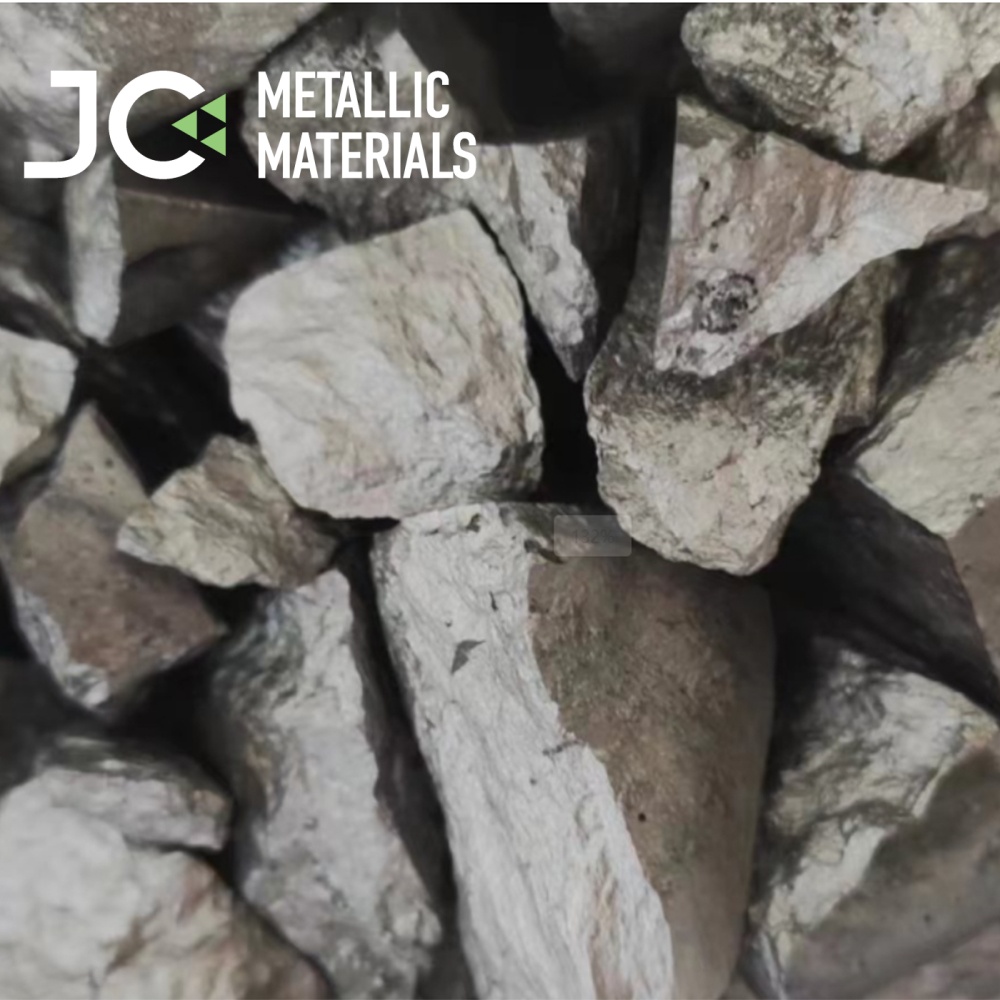
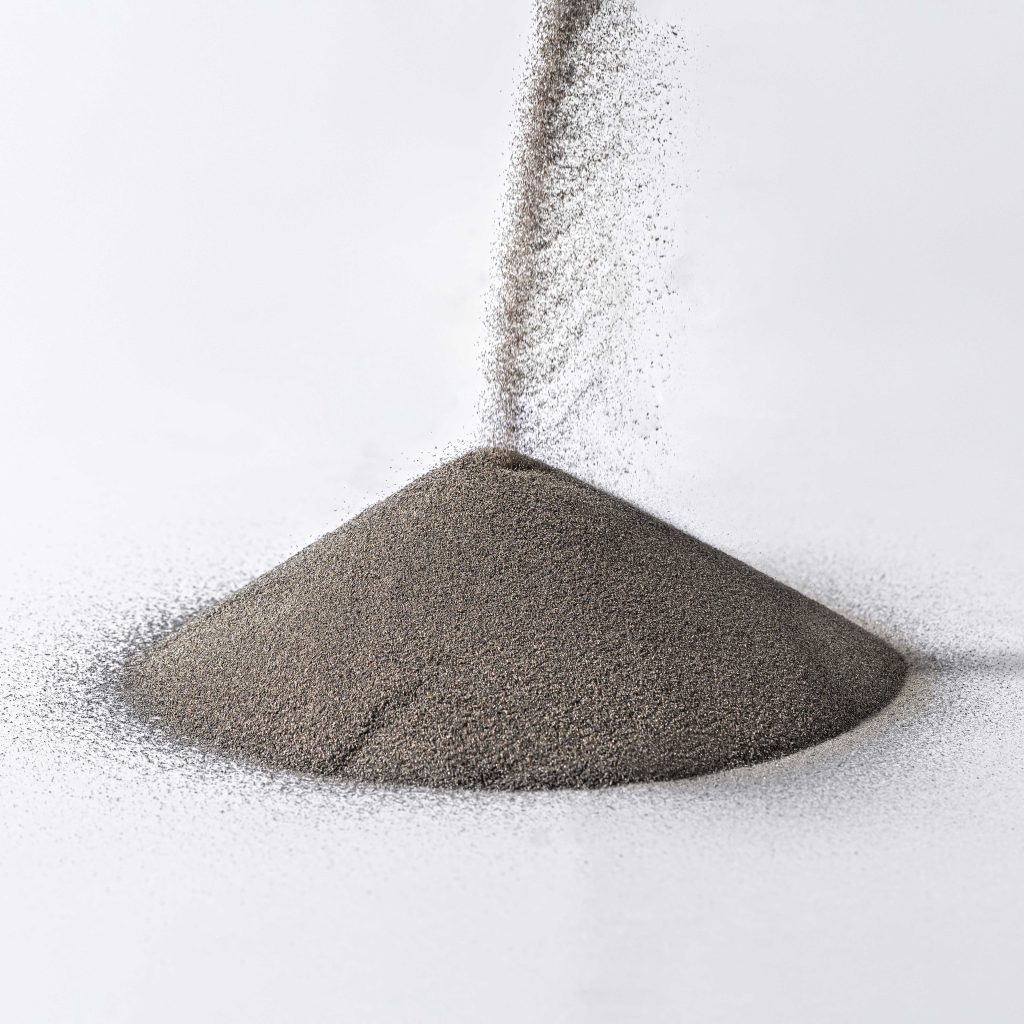
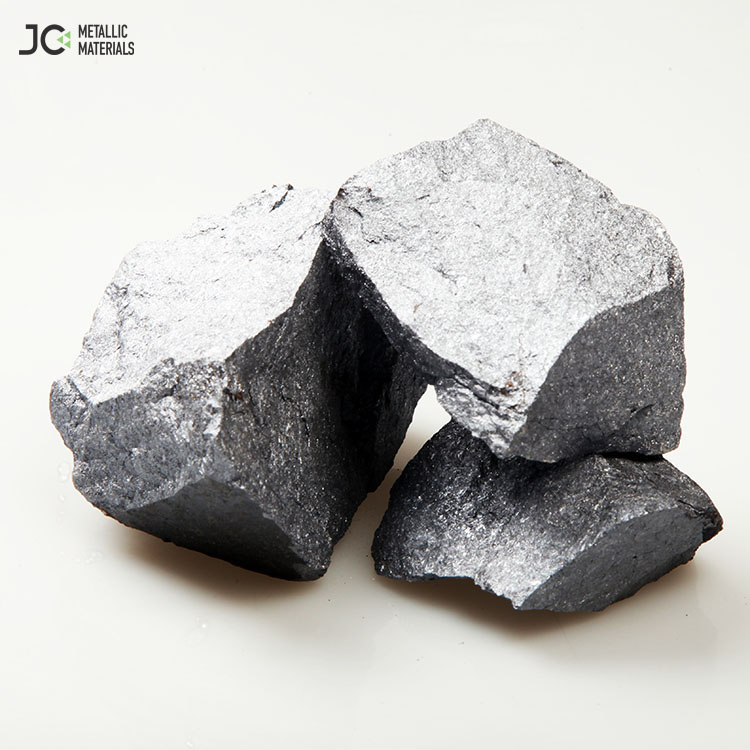
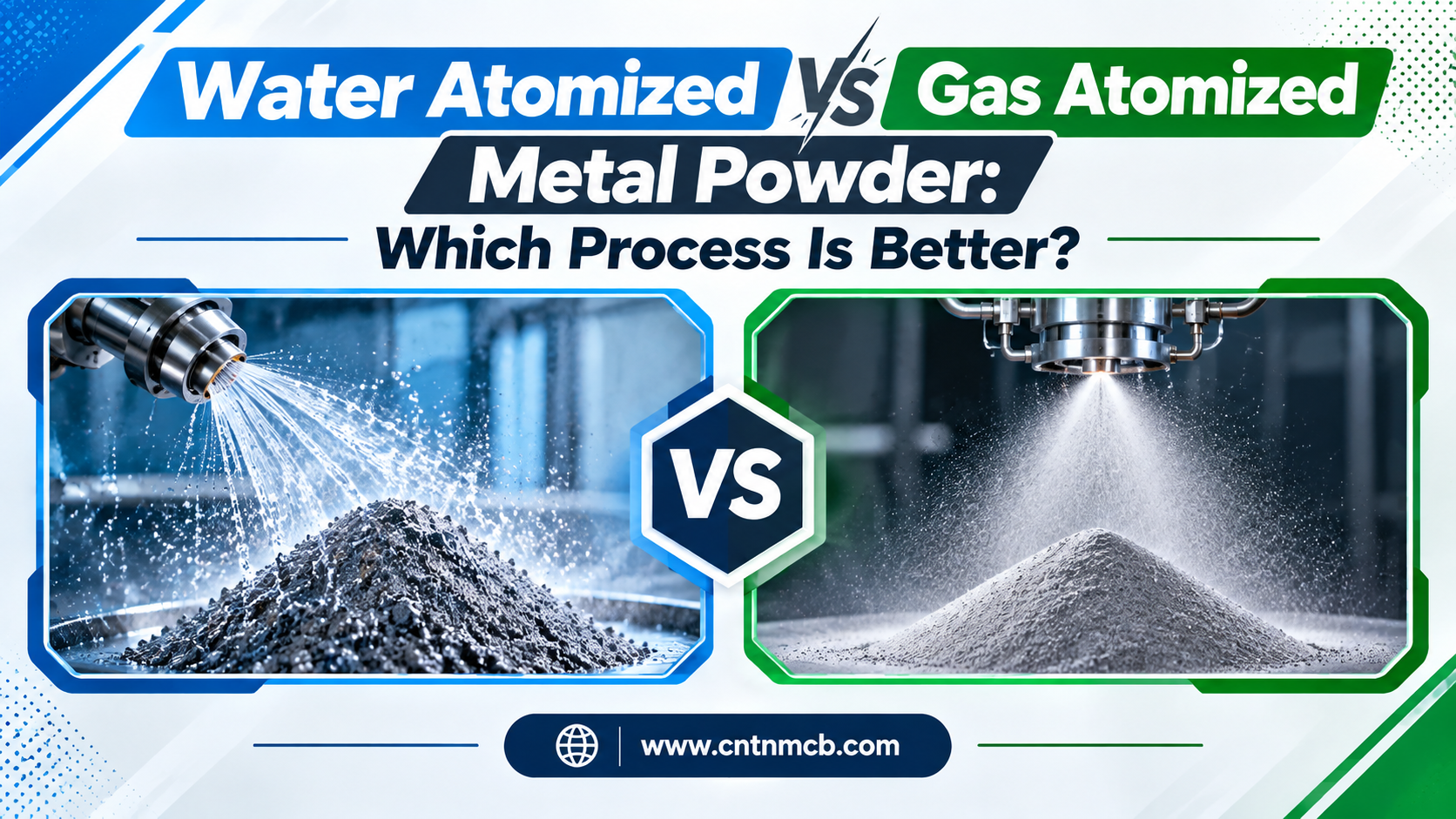
Metal powders are essential raw materials in additive manufacturing, powder metallurgy, metal injection molding, thermal spraying, and various industrial coating processes. However, the quality and performance of these powders depend heavily on the manufacturing method used to produce them.
Water atomization and gas atomization are two widely used processes for converting molten metal into powder. Both methods break liquid metal into small droplets that cool and solidify into particles. However, they produce different particle shapes, surface characteristics, flow properties, and production costs.
Choosing between water atomized and gas atomized metal powder requires a clear understanding of the application, material requirements, and production conditions. This guide compares both processes, explains their advantages and limitations, and helps manufacturers identify the most suitable option for their industrial needs.
What Is Water Atomized Metal Powder?
Water atomized metal powder is produced by breaking a stream of molten metal into small droplets using high-pressure water jets. The droplets cool rapidly, solidify, and are collected for further processing.
Manufacturers commonly use this method to produce iron, steel, stainless steel, copper, and other metal powders. Its suitability depends on the material’s chemical composition, oxidation sensitivity, and required powder specifications.
How Does Water Atomization Work?
The water atomization process generally involves the following steps:
- Metal melting:Manufacturers melt the selected metal or alloy in a suitable furnace. Temperature and chemical composition must remain within the required specifications.
- Molten metal delivery: The liquid metal flows through a nozzle or tundish into the atomization chamber.
- High-pressure water spraying:Water jets strike the molten stream and break it into numerous small droplets.
- Rapid cooling: The droplets lose heat quickly and solidify into metal particles.
- Powder collection: The solidified particles are separated from the water and collected for processing
- Drying and classification: Manufacturers remove moisture, screen the powder into specified size ranges, and conduct quality checks.
Additional operations may include annealing, deoxidation, blending, or other treatments, depending on the alloy and intended application.
Main Characteristics of Water Atomized Powder
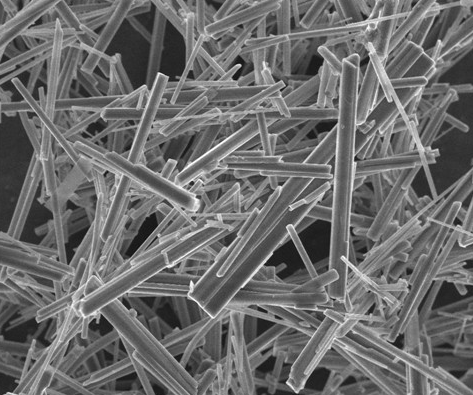
Water atomized particles are generally irregular, angular, or somewhat elongated. Their shapes result from the interaction between the molten metal droplets and the water jets during breakup and solidification.
This irregular morphology can provide useful mechanical interlocking in compacted powder components. However, it can also increase friction between particles and reduce flowability.
Water atomization is particularly attractive when manufacturers prioritize economical production, high throughput, and suitable compaction behavior rather than highly spherical particles.
What Is Gas Atomized Metal Powder?
Gas atomized metal powder is manufactured by breaking a stream of molten metal into small droplets using high-pressure gas, commonly argon or nitrogen. The droplets cool and solidify while traveling through the atomization chamber.
Because gas does not cool the droplets in the same way as water, the process can produce particles with relatively smooth surfaces and more spherical shapes. These characteristics make gas atomization especially valuable for applications requiring consistent powder flow and controlled particle packing.
Gas atomization is widely used to produce stainless steel, tool steel, nickel-based superalloys, cobalt alloys, titanium alloys, aluminum alloys, and other engineering materials.
How Does Gas Atomization Work?
The process usually follows these stages:
- Melting the material:The selected metal or alloy is melted under controlled conditions.
- Preparing the atomization system: The chamber and gas supply are configured for the material and required powder specifications.
- Breaking the molten stream: High-pressure gas jets disintegrate the liquid metal into fine droplets.
- Droplet cooling: The droplets travel through the chamber, lose heat, and solidify into particles.
- Powder collection: Solid particles are collected from the chamber, often under controlled atmospheric conditions.
- Classification and inspection: The powder is screened, separated by particle size, and tested for chemical composition, morphology, and other relevant properties.
Some materials require vacuum melting, inert-gas protection, or specialized handling to limit contamination and oxidation.
Different atomization methods can produce different particle sizes, shapes, and material characteristics, making process selection important for industrial powder applications. Learn more about metal powder atomization processes.
Main Characteristics of Gas Atomized Powder
Gas atomized particles are generally more spherical than water atomized particles, although their exact morphology depends on the equipment, alloy, gas pressure, and process conditions.
Spherical particles typically provide better flowability and more predictable packing behavior. These properties are valuable in metal additive manufacturing, powder-fed thermal spraying, and other processes that depend on reliable powder feeding.
Gas atomization can also produce fine powders, but achieving smaller particle sizes may reduce yield and increase processing costs. Therefore, manufacturers must balance particle size, quality, and production economics.
Water Atomized vs Gas Atomized Metal Powder: Key Differences
Although both processes convert molten metal into solid particles, their operating mechanisms create important differences.
The following table summarizes their typical characteristics. Actual results depend on alloy composition, atomization parameters, and subsequent powder processing.
| Comparison Factor | Water Atomized Powder | Gas Atomized Powder |
| Atomization medium | High-pressure water | High-pressure gas |
| Particle morphology | Generally irregular or angular | Generally spherical or near-spherical |
| Flowability | Usually lower | Usually higher |
| Particle packing | Depends on shape and size distribution | Often more predictable for spherical grades |
| Oxidation control | Water-related oxidation may require attention | Inert gas can reduce oxidation |
| Compaction behavior | Often favorable for pressing applications | Depends on particle shape and powder grade |
| Production economics | Often more economical for suitable applications | Generally more expensive |
| Common applications | Powder metallurgy and pressed components | Additive manufacturing and advanced coatings |
| Fine powder production | Possible, depending on process conditions | Possible, with yield and cost considerations |
| Typical advantage | Cost-effective production | Controlled morphology and feeding behavior |
These differences are useful guidelines rather than universal rules. A properly engineered water atomized powder can outperform an unsuitable gas atomized grade in a particular application.
Particle Shape and Surface Characteristics
Particle morphology is one of the most important differences between water atomized and gas atomized metal powders. It affects how particles move, pack, compact, and interact during manufacturing.
Water Atomized Powder Morphology
Water atomization generally produces irregular particles with angular edges and uneven surfaces. Rapid cooling and the mechanical action of water jets influence the final particle shape.
These characteristics can benefit conventional powder metallurgy because irregular particles may interlock during compaction. However, the same features can increase friction between particles and make powder feeding less consistent.
Surface roughness and internal porosity vary with the atomization process and material. Manufacturers should evaluate actual powder samples instead of assuming that every water atomized grade has identical properties.
Gas Atomized Powder Morphology
Gas atomization generally produces more spherical particles because surface tension encourages liquid droplets to adopt a rounded shape before solidification.
Spherical morphology can improve powder flow and support uniform spreading during layer-based additive manufacturing. It can also help maintain consistent feeding in automated production systems.
However, gas atomized powders are not always perfectly spherical. Satellites, hollow particles, irregular particles, and other morphological variations can occur.
Which morphology is better?
Spherical particles are usually preferable when flowability, powder spreading, and controlled delivery are critical. Irregular particles may be more suitable when mechanical interlocking and economical compaction are more important.
Flowability and Packing Density
Powder flowability describes how easily particles move through a hopper, nozzle, feeder, or other handling system. Packing density describes how effectively particles occupy a given volume.
Both properties influence manufacturing consistency and final component quality.
Flowability of Water Atomized Powder
Irregular water atomized particles tend to experience greater friction and mechanical interference. Consequently, some grades flow less easily than comparable spherical powders.
Poor flowability can create difficulties in automated powder feeding, especially when equipment requires a steady and repeatable material supply.
Nevertheless, water atomized powders can work effectively in pressing operations where flow requirements are less demanding. Particle size distribution, moisture, surface condition, and additives can also influence their behavior.
Flowability of Gas Atomized Powder
Spherical gas atomized particles generally flow more freely because their shape reduces mechanical interlocking.
This advantage is particularly important for laser powder bed fusion, powder-fed directed energy deposition, and other processes that require controlled powder delivery.
Packing density is more complex than particle shape alone. Particle size distribution, size ratios, and surface characteristics also affect how efficiently particles occupy available space.
Selection recommendation: Choose gas atomized powder when consistent flow and spreading are essential. Consider water atomized powder when the process can accommodate its flow characteristics and the economics are more favorable.
Oxidation, Purity, and Chemical Composition
Chemical composition and contamination control are critical in metal powder manufacturing. Oxygen, nitrogen, moisture, and other impurities can influence material properties, process stability, and final product performance.
Oxidation Risks in Water Atomization
Water atomization brings molten metal into direct contact with water and steam. Depending on the alloy and process conditions, this interaction can increase oxidation or introduce surface oxides.
Certain materials require additional processing to achieve their target oxygen content. Manufacturers may use controlled atmospheres, optimized atomization parameters, annealing, or deoxidation treatments where appropriate.
Water atomization is not inherently unsuitable for high-quality powders. Its suitability depends on the alloy’s chemistry, the acceptable impurity limits, and the effectiveness of process controls.
Oxidation Control in Gas Atomization
Gas atomization can offer stronger control over the surrounding atmosphere, particularly when argon or another suitable inert gas is used.
This approach is valuable for oxidation-sensitive alloys and applications with strict chemical specifications. Vacuum melting and controlled handling can provide further protection where required.
However, gas atomization does not guarantee oxygen-free powder. Oxygen can enter through raw materials, equipment, leaks, surface reactions, or post-processing.
Buyers should request measured oxygen content, chemical composition reports, and applicable impurity limits rather than relying solely on the atomization method.
Production Cost and Manufacturing Efficiency
Production economics often determine which atomization method is practical for a commercial application. Buyers should consider more than the initial price per kilogram.
Why Water Atomized Powder Can Cost Less
Water atomization can offer high production throughput and economical equipment operation for suitable materials. These advantages make it attractive for large-volume industrial powders.
Its cost structure may also suit manufacturers producing pressed components in established powder metallurgy operations.
However, the total cost can increase when a powder requires extensive drying, deoxidation, annealing, classification, or additional quality control. Alloy selection and required particle sizes also affect the final price.
Why Gas Atomized Powder Can Cost More
Gas atomization often involves higher equipment, gas supply, and process-control costs. Producing fine powder with a narrow particle size distribution can further increase the price.
Some applications also require inert handling, specialized packaging, and detailed characterization.
Despite the higher purchase price, gas atomized powder may reduce overall manufacturing costs when it improves feeding reliability, lowers rejection rates, or supports a process that irregular powder cannot perform consistently.
How Should Buyers Compare Costs?
Evaluate the following factors before making a decision:
- Price per kilogram and minimum order quantity.
- Usable powder yield within the required particle size range.
- Additional processing and handling expenses.
- Scrap rates and production consistency.
- Storage requirements and material losses.
- Quality testing and certification costs.
The lowest material price is not always the lowest total manufacturing cost. Buyers should compare the cost of producing an acceptable finished component.
Applications of Water Atomized Metal Powder
Water atomized powders are widely used in applications where suitable compaction characteristics, high production volumes, and economical material costs are important.
Powder Metallurgy Components
Powder metallurgy uses metal powders to manufacture components through processes such as compaction and sintering.
Water atomized iron and steel powders are commonly used for gears, bushings, structural components, and other pressed metal parts. Irregular particle shapes can support mechanical interlocking during compaction.
The suitability of a particular grade depends on compressibility, green strength, sintering behavior, and the required final properties.
Automotive and Industrial Parts
Automotive and industrial manufacturers use powder metallurgy to produce components with repeatable dimensions and material utilization.
Applications may include selected transmission parts, sprockets, pulleys, bearings, and structural components. The exact material grade depends on mechanical loads, operating conditions, and component design.
Water atomized powder can be attractive for high-volume production when its characteristics satisfy the manufacturing requirements.
Friction Materials and Related Products
Certain metal powders are incorporated into friction materials, including selected braking and clutch formulations.
They can contribute to thermal conductivity, wear behavior, and friction performance. However, the final properties depend on the complete formulation, particle characteristics, and processing conditions.
Water atomized iron, copper, and other suitable powders may be considered for these applications after material compatibility testing.
Welding and Specialized Industrial Uses
Selected water atomized powders are used in welding-related materials, metal-filled formulations, and other industrial processes.
Their suitability depends on alloy chemistry, particle size, oxygen content, and the requirements of the specific application.
Manufacturers should confirm the powder grade against the relevant process specification before placing a production order.
Applications of Gas Atomized Metal Powder
Gas atomized powders are especially valuable when particle morphology, controlled feeding, and material consistency influence process performance.
Metal Additive Manufacturing
Metal additive manufacturing builds components layer by layer or through controlled deposition of metal feedstock.
Laser powder bed fusion commonly requires powders with suitable particle sizes, flow characteristics, and spreading behavior. Gas atomized stainless steel, nickel alloys, titanium alloys, and other materials are widely used for this purpose.
However, not every gas atomized powder is suitable for every additive manufacturing machine. Buyers must verify particle size distribution, morphology, chemistry, and
machine-specific requirements.
Aerospace and High-Performance Components
Aerospace applications can require materials that combine strength, fatigue resistance, corrosion resistance, and performance at elevated temperatures.
Gas atomized nickel-based superalloys, titanium alloys, and other specialized materials can support the production of selected components.
Applications may include qualified additive-manufactured brackets, complex structures, and other engineered parts. Material selection and process qualification remain essential because atomization alone does not establish component performance.
Thermal Spray Coatings
Thermal spraying deposits material onto a surface to improve wear resistance, corrosion protection, thermal performance, or other properties.
Certain gas atomized powders are useful in powder-fed thermal spray processes because controlled morphology can support reliable feeding.
However, the ideal powder depends on the coating process. Plasma spraying, high-velocity oxy-fuel spraying, and other methods can require different particle characteristics and material compositions.
Metal Injection Molding
Metal injection molding combines fine metal powder with a binder to produce complex shapes. The molded component then undergoes debinding and sintering.
Spherical or near-spherical powders can provide useful flow and packing characteristics in suitable formulations.
Nevertheless, particle size, surface chemistry, binder compatibility, and sintering behavior must all be considered. Both powder morphology and the overall feedstock formulation affect manufacturing performance.
How to Choose Between Water Atomized and Gas Atomized Metal Powder?
Choosing the right powder requires a systematic evaluation of the manufacturing process, product specifications, and total operating cost.
Step 1: Define the Final Application
Start by identifying the product or manufacturing operation that will use the powder.
Pressed components, additive manufacturing parts, and thermal spray coatings have different requirements. A powder that works well for compaction may not perform adequately in a laser powder bed fusion system.
Define the critical performance characteristics before comparing suppliers.
Step 2: Specify the Required Particle Size
Particle size distribution affects flow, packing, surface finish, and process stability.
Additive manufacturing systems often require carefully controlled particle size ranges.
Conventional powder metallurgy may accommodate different distributions depending on the component and compaction process.
Ask suppliers for particle size data, such as D10, D50, and D90 where appropriate. These values describe different points in the particle size distribution and help buyers compare grades objectively.
Step 3: Evaluate Particle Morphology and Flowability
Request representative powder samples and examine their morphology. Microscopy can reveal particle shape, satellites, surface features, and other variations.
Where relevant, request flowability measurements, apparent density, and tap density. These tests help determine whether the powder is compatible with the intended equipment.
For additional technical guidance, review this research on metal powder characterization for additive manufacturing, which examines methods for evaluating powder properties.
Do not assume that atomization method alone guarantees a specific result.
Step 4: Confirm Chemical and Physical Specifications
Review alloy composition, oxygen content, moisture limits, and other relevant impurities.
Depending on the application, you may also need information about compressibility, sintering behavior, hardness, or thermal properties.
For regulated or safety-critical products, confirm the applicable material standards and qualification requirements before purchasing.
Step 5: Compare Total Cost and Supply Reliability
Request quotations for the same alloy, particle size range, packaging conditions, and quality requirements.
Compare minimum order quantities, production lead times, sample availability, testing documentation, and batch-to-batch consistency.
A reliable supplier should be able to explain the manufacturing route, quality-control process, and available technical documentation.
Step 6: Conduct Application-Specific Testing
Before approving a powder for large-scale production, test it under representative operating conditions.
For powder metallurgy, evaluate compaction, green strength, sintering, and finished-component properties. For additive manufacturing, assess spreading, printing stability, porosity, and mechanical performance as appropriate.
Testing helps establish whether the powder meets actual production requirements rather than relying on general material descriptions.
Common Mistakes When Selecting Atomized Metal Powder
Even experienced buyers can make costly mistakes when they compare powder grades using only a few basic specifications.
Choosing by price alone: A lower-priced powder may require additional processing or create more manufacturing defects. Compare the total cost of acceptable finished products.
Assuming all spherical powders are equivalent: Sphericity is important, but particle size distribution, satellites, internal porosity, and chemistry also influence performance.
Ignoring oxygen content: Oxygen limits can be critical for reactive alloys and demanding applications. Request test results that match the intended specification.
Using one grade for every process: Different machines and production methods require different powder characteristics. Confirm compatibility before switching materials.
Skipping sample validation: Supplier specifications provide useful information, but production trials reveal how a powder performs in the actual application.
Overlooking documentation: Missing test reports, traceability information, or agreed quality requirements can create problems during inspection and qualification.
Avoiding these mistakes helps manufacturers select powder grades that provide consistent performance and predictable production costs.
What Should Buyers Ask a Metal Powder Manufacturer?
Before selecting a supplier, buyers should obtain enough technical information to evaluate the powder and verify its suitability.
Consider asking the following questions:
- Which atomization process is used to manufacture the powder?
- What alloys and chemical compositions are available?
- Which particle size ranges can you supply?
- Can you provide particle morphology images or test reports?
- What are the specified oxygen and impurity limits?
- Which quality standards or inspection procedures do you follow?
- Can you provide samples for application testing?
- What are your minimum order quantity and production lead time?
- Can you supply custom particle size distributions or alloy compositions?
- What batch traceability and technical documentation are available?
Clear answers help buyers distinguish between suppliers that offer a basic commodity and those capable of supporting more demanding industrial requirements.
When evaluating custom powder, also confirm whether the supplier can consistently reproduce the agreed specifications at commercial production volumes.
Related Metal Powder Guides
Choosing the right metal powder requires an understanding of manufacturing processes, particle characteristics, and application requirements. Explore these related guides to learn more about metal powder selection, production methods, and industrial applications.
Potassium Alginate: Industrial Applications, Benefits & Buying Guide
Why High Performance Alloys Are Important for Modern Engineering
Chromium Metal Powder: Properties, Applications & How to Choose the Right Supplier
Calcium Alginate: Manufacturing Process, Uses & Supplier Selection Guide
Calcium Alginate vs Silver Alginate: 7 Key Differences You Should Know
What Is Sodium Alginate? Applications, Properties & Industrial Uses Guide (2026)
China’s Role in Supplying Sodium Alginate Powder to Global Industries
Why Refractory Alloys Are Important for Extreme Heat Environments
Top 7 Molybdenum Powder Manufacturers in China
Alginate Powder vs Sodium Alginate: What’s the Difference?
Final Thoughts
Water atomized and gas atomized metal powders serve different manufacturing needs. Neither process is universally better because the right choice depends on particle characteristics, alloy chemistry, production requirements, and budget.
For manufacturers, the most effective approach is to define the required specifications, compare suitable powder grades, review supplier documentation, and validate performance through application-specific testing.
If you need metal powder for industrial manufacturing, contact Jinchun Metal to discuss your material requirements, target particle size, alloy composition, and application. The team at Chengdu Jinchun Metallic Materials Co., Ltd. can help you explore suitable metal powder options and request a quotation based on your project specifications.