
 Korean
  English
  French
  Japanese
  Spanish
  Vietnamese
  Thai
Thai  Portuguese
  German
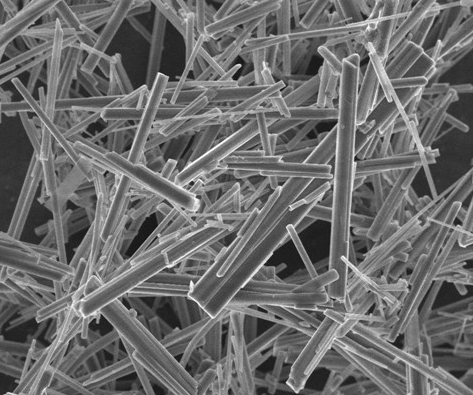
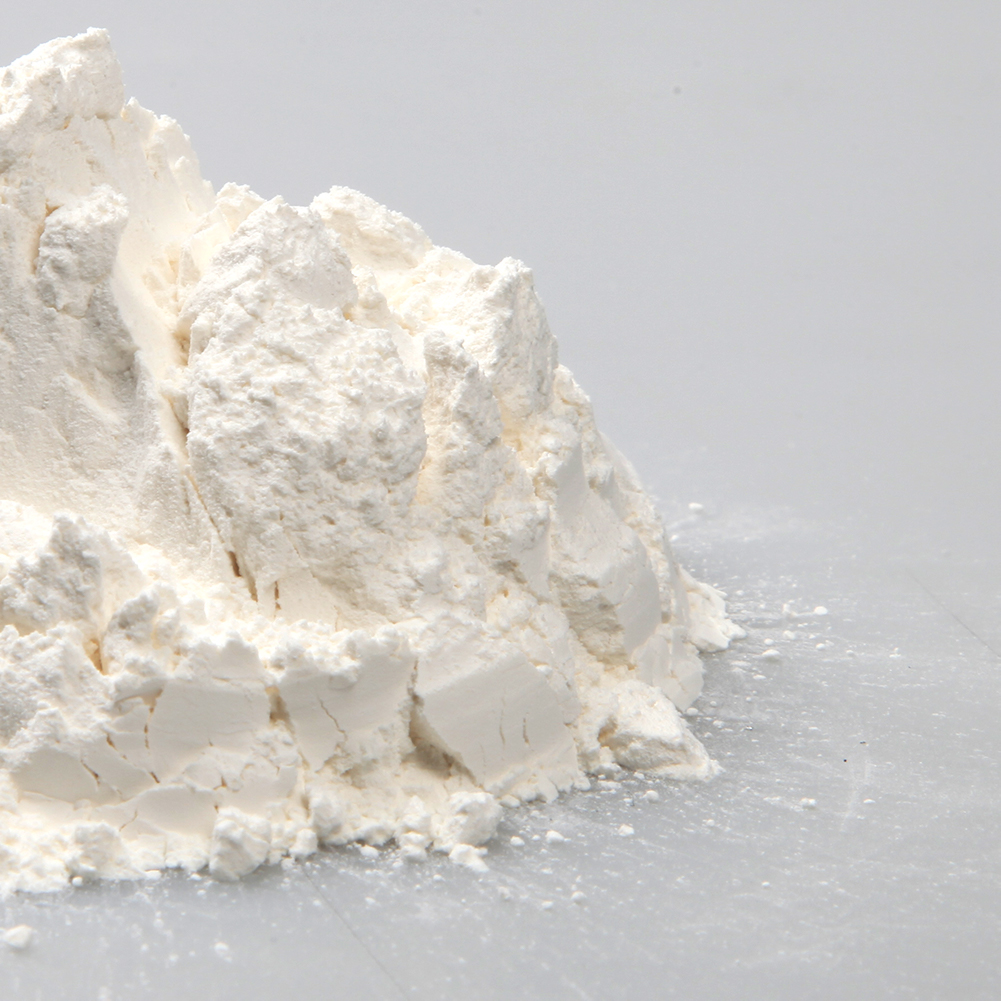
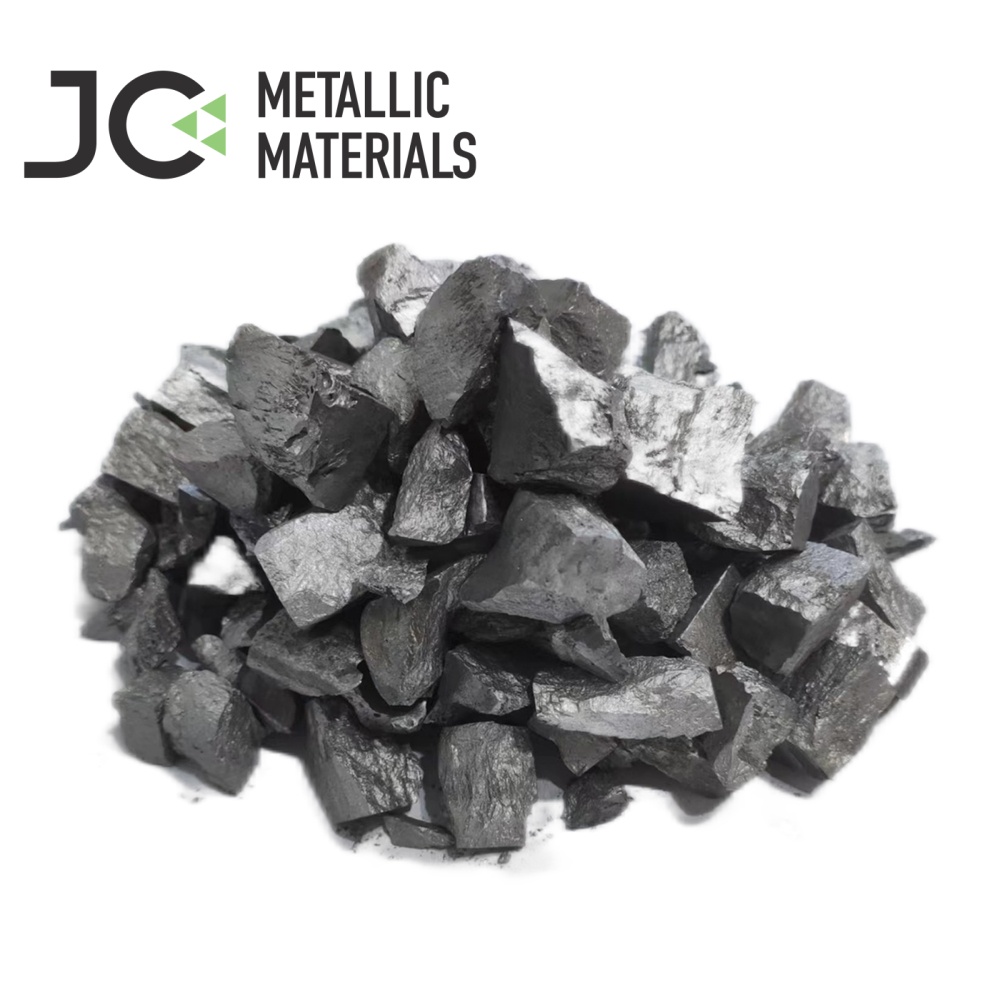
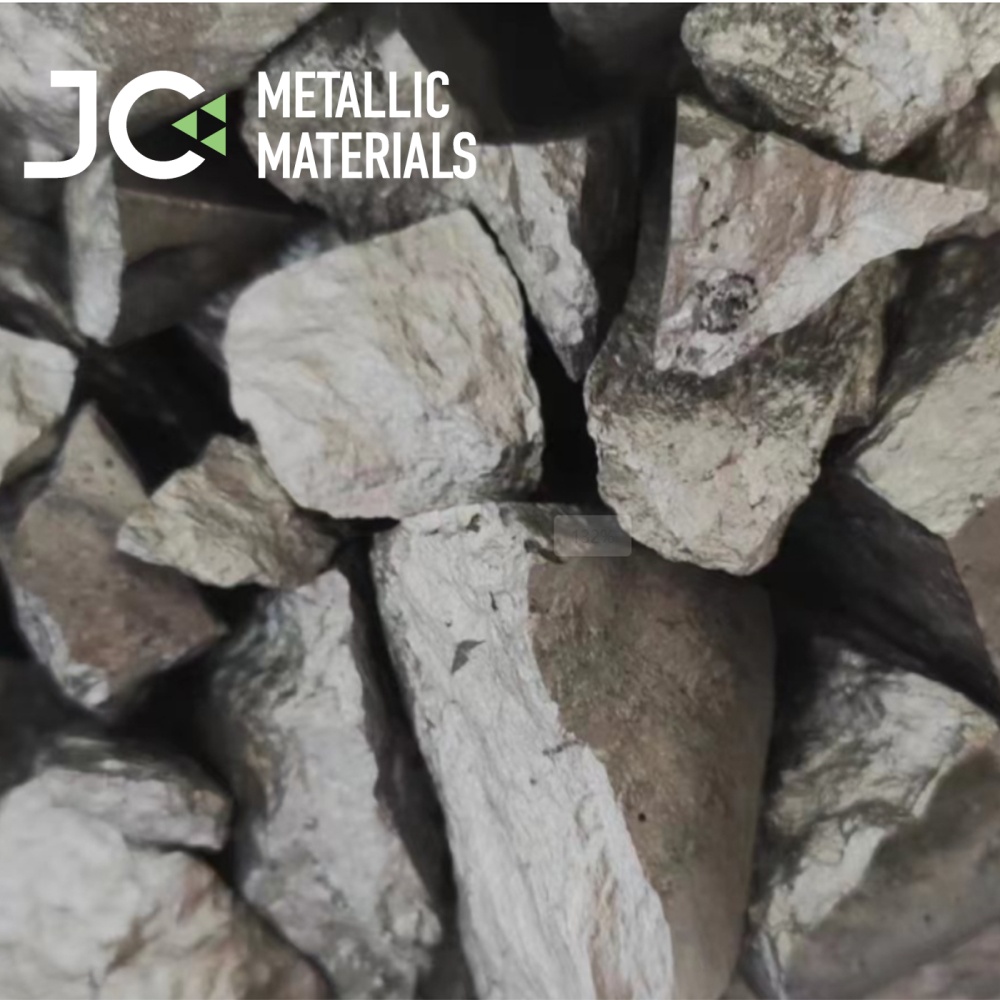
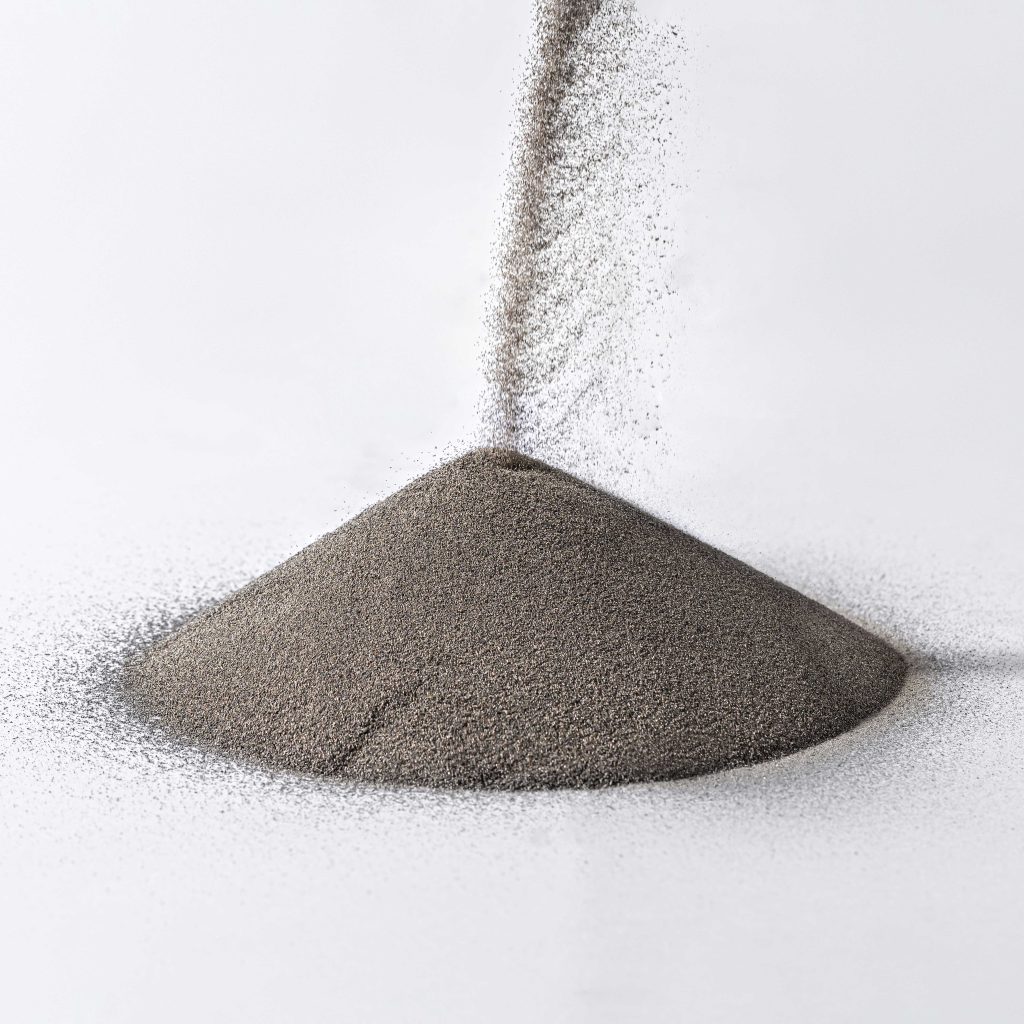
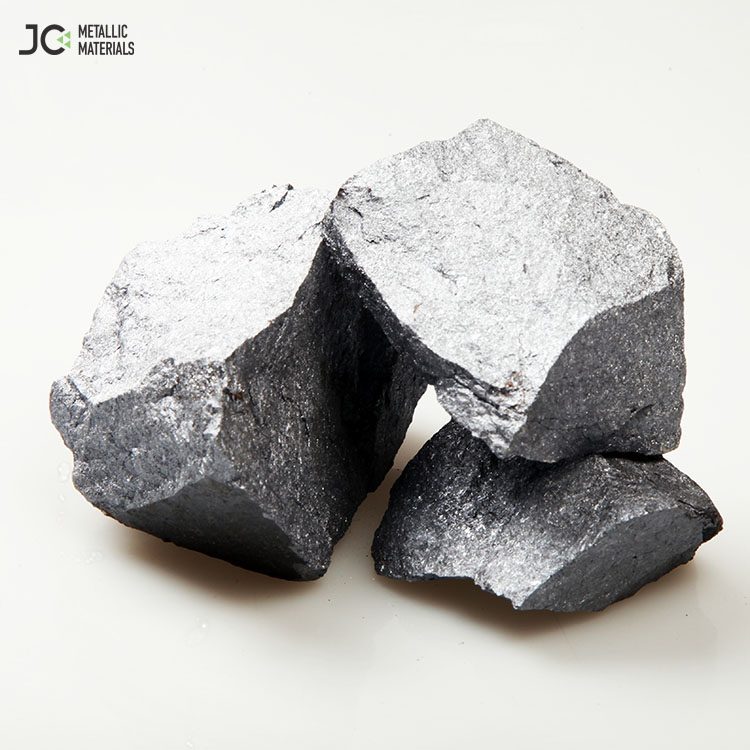
Powder metallurgy is reshaping modern manufacturing by enabling cost efficiency, design flexibility, and large-scale precision production. Modern machines require strong, durable, and reliable materials constantly. It offers a smarter, sustainable solution for industries seeking high-performance components with minimal material waste and consistent quality. Therefore, these components are now essential for competitive global manufacturing.
In this guide, we will explore metallurgy powder as a game changer in manufacturing. We will examine its fundamentals, production benefits, and reasons why global manufacturers invest. We will highlight how it is transforming modern production and expanding its role across advanced industries.
What is Powder Metallurgy?
Powder metallurgy (PM) is an advanced manufacturing process. Fine metal powders are pressed into shapes and then heated (sintered) to form strong, solid parts.
Unlike machining or casting, PM produces near-net-shape components. This reduces the need for extra processing. It also saves time and improves material usage.
Today, metallurgy powder is used in many industries. These include automotive, aerospace, medical, electronics, and industrial machinery.
Why Powder Metallurgy is Driving Change in Modern Manufacturing?
Metallurgy powder is redefining modern manufacturing. It empowers companies to produce high-performance components with precision, efficiency, and scalability—while reducing costs and material waste. Leading manufacturers worldwide are adopting PM to stay competitive and future-ready.
1: Cost Efficiency at Scale
Metallurgy powder reduces production costs by minimizing material waste and eliminating the need for extensive secondary operations. Manufacturers can achieve high-volume output without inflating labor or energy expenses. This efficiency makes PM especially valuable for industries producing thousands or millions of parts annually.
2: Optimal Material Utilization
Nearly all of the raw metal powders are converted into finished components, significantly reducing scrap and recycling costs. This is particularly important when working with expensive alloys or specialty metals. The process ensures that material investment is maximized without compromising quality.
3: Advanced Design Capabilities
PM allows the creation of complex shapes and integrated features that are difficult or impossible with traditional methods. Lightweight designs, internal structures, and precision geometries can be achieved in a single production cycle. This flexibility enables manufacturers to innovate while reducing assembly requirements.
4: Consistent Quality and Reliability
Each component produced through powder metallurgy maintains uniform density, dimensional accuracy, and structural integrity. This repeatable quality ensures reliability across large production runs. Manufacturers benefit from reduced defects, lower rework, and higher customer satisfaction.
5: Scalable and Flexible Production
Metallurgy powder adapts efficiently to both medium and high-volume production without sacrificing quality or consistency. It allows manufacturers to quickly adjust output based on market demand. This scalability makes PM a strategic choice for global operations and long-term growth.
6: Sustainable and Environmentally Friendly
PM consumes less energy compared to melting and casting processes, reducing overall carbon footprint. Minimal material waste and near-net-shape production further enhance environmental sustainability. Companies adopting PM can meet stricter ESG standards while optimizing operational efficiency.
Comparing Metallurgy Powder with Conventional Manufacturing
Metallurgy powder offers a more efficient and modern approach compared to conventional manufacturing methods. It improves material usage, design flexibility, and production consistency, making it ideal for today’s industrial needs.
| Aspect | Powder Metallurgy | Traditional Methods |
| Process | Press & sinter powders | Cast or machine |
| Material Use | Low waste | High waste |
| Cost | Cost-effective in bulk | Higher cost |
| Design | Complex shapes | Limited design |
| Precision | High accuracy | Less consistent |
| Scalability | Easy to scale | Difficult to scale |
Industrial Applications of Powder Metallurgy
Powder metallurgy is widely used across industries due to its precision, efficiency, and design flexibility.
Automotive Industry
PM produces engine parts, gears, and bearings with high strength and low weight. This improves performance while reducing production costs.
Aerospace Sector
Lightweight and heat-resistant components can be made efficiently with PM. This ensures reliability and precision in aircraft and spacecraft.
Medical Industry
Surgical instruments and implants are manufactured with high accuracy and biocompatibility. PM allows porous structures for better tissue integration.
Electronics
Magnetic materials, connectors, and conductive parts are made with consistent quality. Complex shapes reduce assembly steps and improve performance.
Industrial Machinery
Wear-resistant parts, gears, and filters are produced for heavy-duty applications. PM enhances durability and operational efficiency.
Powder Metallurgy: A Complete Manufacturing Guide
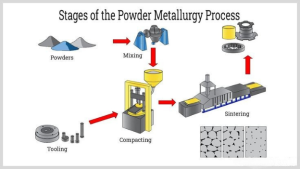
Metallurgy powder begins with the production of fine metal powders. These powders are carefully controlled for size and purity to ensure optimal performance.
Next, the powders are blended with additives to achieve a uniform composition. This step guarantees consistent mechanical and chemical properties in the final component.
The blended powders are then compacted under high pressure into the desired shape. This creates a “green part” that is strong enough for handling.
Sintering follows, where the compacted part is heated below the metal’s melting point. This bonds the particles together, giving the component its strength and durability.
Finally, optional secondary operations may be applied, such as machining, heat treatment, or surface finishing. These enhance precision, hardness, or corrosion resistance as needed.
Emerging Trends Shaping the Future of Metallurgy Powder
Metallurgy powder is driving modern manufacturing forward. Automation and advanced production techniques are improving efficiency and precision. Industries are adopting PM for faster and more reliable output.
Sustainability is becoming a key focus. Near-net-shape production reduces material waste and energy use, while new alloys and composite powders create stronger, lighter components. This helps companies meet environmental standards.
Digitalization is transforming the way PM parts are made. AI-driven quality control and smart factory integration ensure consistent results. Predictive maintenance and data analytics reduce costs and production downtime.
Choosing the Right Powder Metallurgy Supplier
Selecting the right supplier is critical to fully harness the benefits of powder metallurgy. Reliable suppliers provide high-quality powders, advanced production technology, and consistent performance for global manufacturing needs.
Why Chengdu Jinchun Metallic Materials Co., Ltd. Stands Out?
청두 진춘 금속 재료 유한 공사 is a trusted name in the global PM industry. We offer a wide range of premium metal powders tailored to automotive, aerospace, medical, and industrial applications.
- Advanced production technology ensuring consistent quality
- Customizable powder solutions for diverse applications
- Strict quality control adhering to international standards
- Competitive pricing for global buyers
- Reliable supply chain with on-time delivery
By partnering with Chengdu Jinchun, manufacturers can enhance production efficiency, reduce costs, and achieve consistent, high-performance results in every project.
Final Thoughts
Powder metallurgy is transforming modern manufacturing. It offers efficiency, precision, and scalability. Companies that adopt PM gain a competitive edge.
Partnering with the right supplier ensures success. Quality powders, reliable delivery, and expert support make all the difference.
Explore premium metal powders today. Contact Chengdu Jinchun for customized solutions. Request a quote and secure reliable supply. Boost efficiency and production quality now.
Most Asked Questions
Q1: What materials can be used in metallurgy powder?
Answer: Metallurgy powder works with metals like iron, copper, and stainless steel. Alloys including nickel, tungsten, and titanium are also suitable. Custom blends create specific properties for industrial applications.
Q2: Is powder metallurgy cost-effective for large-scale production?
Answer: Yes, powder metallurgy reduces material waste and lowers manufacturing costs. High-volume production is efficient and consistent. Minimal machining further saves resources while maintaining precision and quality across industrial components.
Q3: Can metallurgy powder be used for lightweight components?
Answer: Metallurgy powder allows production of lightweight, high-strength metal parts. Complex internal structures reduce weight without sacrificing durability. This is ideal for automotive, aerospace, and energy applications.
Q4: How do manufacturers ensure consistency and precision?
Answer: Manufacturers use precise powder blending, controlled compaction, and regulated sintering processes. Quality checks monitor density, dimensions, and performance. This ensures uniform, reliable components for industrial applications worldwide.
Q5: Can metallurgy powder produce complex designs?
Answer: Yes. PM allows intricate geometries and integrated features. It enables designs that are difficult or impossible with traditional methods.