 Korean
  English
  French
  Japanese
  Spanish
  Vietnamese
  Thai
Thai  Portuguese
  German
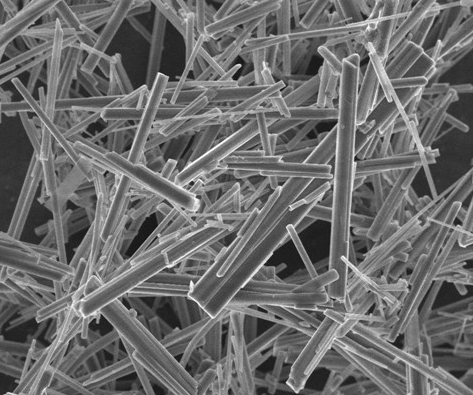
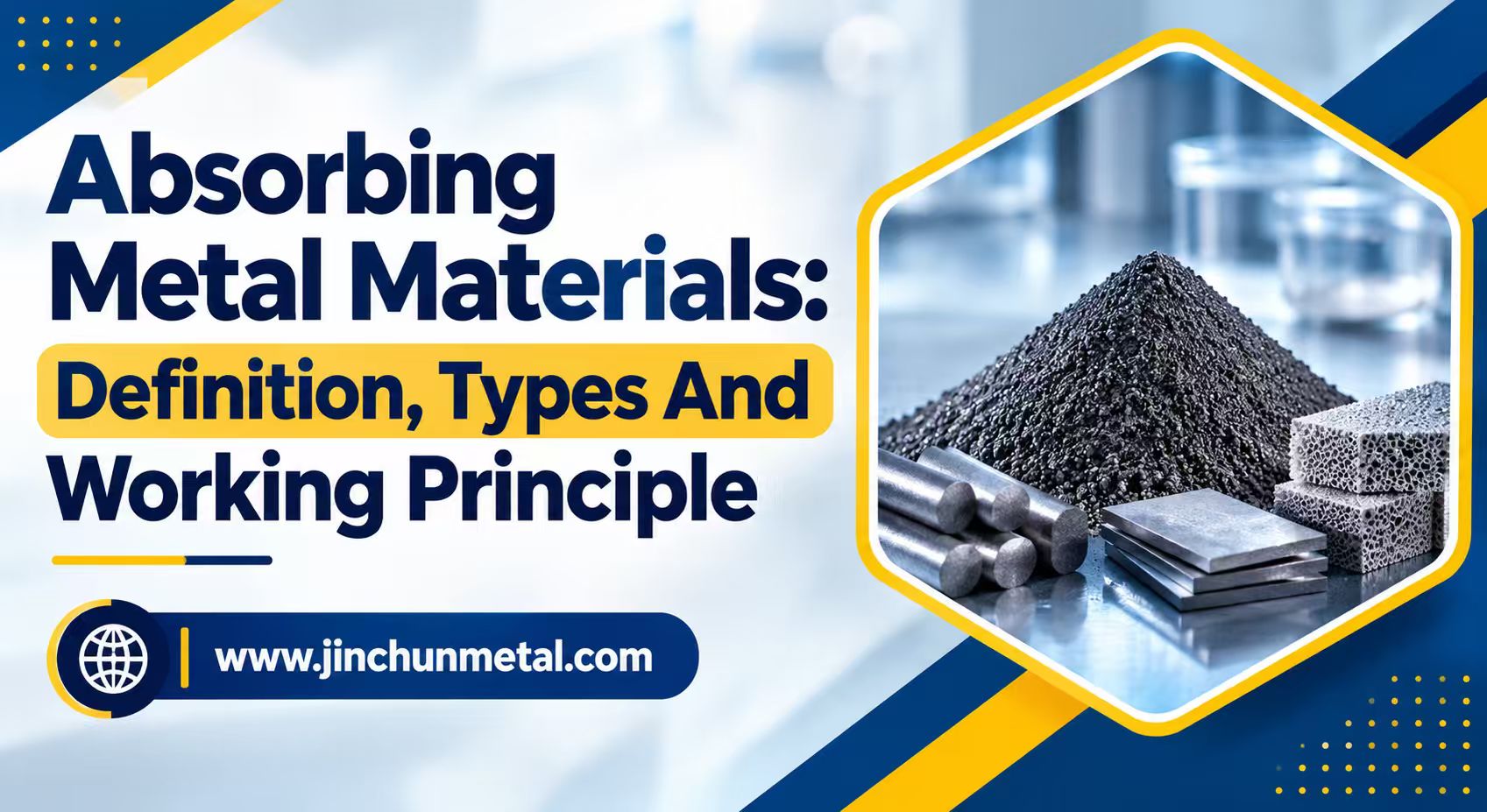
Metal materials are widely used for their strength, conductivity, durability, and thermal performance. However, some specially designed metals and metallic structures can also absorb electromagnetic waves, sound, heat, mechanical energy, or gases.
Absorbing metal materials are used in industries such as aerospace, automotive, electronics, energy, telecommunications, and industrial manufacturing. Their absorption performance depends on factors such as composition, conductivity, magnetic properties, porosity, density, and internal structure.
This article explains what absorbing metal materials are, how they work, and the main types used in industry. It also covers their key properties, applications, advantages, limitations, and the important factors to consider when selecting a suitable absorbing metal material.
What Are Absorbing Metal Materials?
Absorbing metal materials are metals, alloys, composites, or engineered metallic structures designed to absorb and dissipate a specific form of energy or substance. Instead of simply reflecting or transmitting energy, they convert part of it into heat or another form of internal energy.
Different absorbing materials are designed for different purposes. Some absorb electromagnetic and microwave energy, while others are used for sound, heat, mechanical impact, or gases such as hydrogen.
Their absorption performance depends on properties such as electrical conductivity, magnetic permeability, porosity, density, surface area, and material structure. These properties can be engineered according to the requirements of the final application.
How Do Absorbing Metal Materials Work?
Absorbing metal materials work by allowing part of the incoming energy or substance to interact with their internal structure instead of simply reflecting or transmitting it. The absorbed energy is then reduced through electrical, magnetic, thermal, mechanical, or structural losses.
The absorption process is mainly influenced by:
- Material composition: Determines electrical, magnetic, and thermal behavior.
- Electrical conductivity:Controls how electromagnetic energy interacts with the metal.
- Magnetic properties:Help create magnetic losses under alternating electromagnetic fields.
- Porosity and internal structure:Provide additional paths and surfaces for energy interaction.
- Thickness and density:Affect how deeply energy can enter and how much can be dissipated.
- Surface characteristics:Influence the initial reflection and entry of incoming energy.
For electromagnetic applications, incoming waves can generate electrical currents inside the metal. The resistance of the material causes these currents to lose energy as heat. Magnetic materials can provide additional losses as their magnetic domains respond to the changing electromagnetic field.
Electromagnetic shielding performance depends on material properties and structural design, with reflection, absorption, and internal reflections contributing to the overall response. Learn more about electromagnetic shielding and absorption mechanisms.
The mechanism is different for porous and impact-absorbing metals. In porous structures, waves can undergo repeated internal reflections and frictional losses before their energy is dissipated. In metal foams or cellular structures, mechanical energy is absorbed through controlled deformation and gradual cell collapse, reducing the force transferred to surrounding components.
Main Types Of Absorbing Metal Materials
Absorbing metal materials can be classified according to what they absorb and the physical mechanism responsible for absorption.
Common categories include:
- Electromagnetic absorbing metals
- Microwave absorbing materials
- Sound-absorbing metallic materials
- Thermal absorbing materials
- Impact-absorbing metal structures
- Gas-absorbing and reactive metal materials
- Porous and foam-based metallic absorbers
Each category uses a different absorption mechanism and is suitable for different industrial requirements. Some materials may also provide more than one absorption function, especially when they use porous, cellular, or composite structures.
1. Electromagnetic Absorbing Metal Materials
Electromagnetic absorbing materials are designed to reduce electromagnetic energy by absorbing part of the incoming radiation. Their performance is closely related to electrical conductivity, magnetic behavior, material thickness, and structural design.
When an electromagnetic wave enters a suitable metallic absorber, electrical currents and magnetic responses can produce energy losses. These losses convert part of the electromagnetic energy into heat and reduce the energy that is reflected or transmitted.
Common applications include:
- Electronic equipment
- Communication systems
- Automotive electronics
- Aerospace systems
- Radar-related equipment
- Wireless devices
- Electromagnetic compatibility systems
The required operating frequency should be established before selecting the material because electromagnetic absorption is often frequency-dependent.
2. Microwave Absorbing Metal Materials
Microwave absorbing materials are designed to attenuate microwave energy over a defined frequency range. Metallic powders, magnetic alloys, metal-based composites, coatings, and cellular structures can be engineered for this purpose.
A suitable absorber needs to allow enough microwave energy to enter the material instead of reflecting most of it at the surface. Once inside, electrical and magnetic losses help dissipate the energy.
Important factors include:
- Operating frequency
- Material thickness
- Electrical conductivity
- Magnetic permeability
- Density
- Particle size
- Internal structure
- Impedance matching
These materials can be used in radar systems, telecommunications, microwave equipment, electronic systems, aerospace applications, and electromagnetic interference control.
Microwave absorption can be evaluated by examining reflected, transmitted, and absorbed power under defined measurement conditions. The NIST research on microwave power absorption and measurement provides additional technical background.
3. Sound-Absorbing Metallic Materials
Conventional solid metals generally reflect sound, but specially engineered metallic structures can provide acoustic absorption. Porous metals and metal foams are particularly useful because their internal pores allow sound waves to enter the material.
As sound travels through the pores, friction and viscous effects between the air and pore walls convert part of the acoustic energy into heat. Repeated reflections within the internal structure can further increase energy dissipation.
Metallic acoustic absorbers are used in:
- Automotive components
- Industrial machinery
- Transportation systems
- Aerospace structures
- Engine compartments
- Noise-control equipment
Aluminum foam is one example of a lightweight metallic structure that can combine acoustic absorption with mechanical and thermal performance.
4. Thermal Absorbing Metal Materials
Thermal absorbing metal materials are designed to receive, transfer, and distribute heat. Metals such as aluminum and copper are commonly associated with thermal applications because of their high thermal conductivity.
Thermal absorption is different from thermal insulation. A thermal absorber is intended to receive and manage heat, while an insulating material is designed to reduce heat transfer.
| Factor | Thermal Absorbing Material | Thermal Insulation Material |
| Main purpose | Receive and transfer heat | Restrict heat transfer |
| Thermal conductivity | Usually higher | Usually lower |
| Typical function | Heat management | Thermal protection |
| Common applications | Heat sinks, heat exchangers | Insulation systems |
Surface engineering can also influence thermal absorption. Surface roughness, coatings, oxidation, emissivity, and operating temperature can affect how efficiently a metal absorbs and transfers thermal energy.
5. Impact-Absorbing Metal Structures
Impact-absorbing metal structures are designed to absorb mechanical energy during collisions, compression, vibration, or sudden loading. Instead of transferring the entire force directly to another component, the structure undergoes controlled deformation.
Common structures include:
- Metal foams
- Honeycomb cores
- Corrugated metallic structures
- Cellular metal structures
During impact, these structures progressively deform and collapse. This deformation consumes mechanical energy and can reduce the force transmitted to protected components.
They are used in automotive crash protection, aerospace structures, protective systems, industrial machinery, packaging, and vibration-control applications. Density, cell geometry, material strength, thickness, and deformation behavior all affect energy absorption performance.
6. Gas-Absorbing And Reactive Metal Materials
Certain metals and alloys can interact with gases through physical absorption, adsorption, or chemical reactions. Hydrogen is an important example because some metallic systems can take hydrogen into their structure and form metal hydrides.
These properties have applications in:
- Hydrogen storage
- Gas purification
- Vacuum systems
- Chemical processing
- Getter systems
- Energy technologies
It is important to distinguish absorption from adsorption. Absorption occurs when a substance enters the bulk of a material, while adsorption mainly involves molecules attaching to a material’s surface.
Some systems can involve both mechanisms, depending on the material structure and operating conditions.
7. Porous And Foam-Based Metallic Absorbers
Porous metals and metal foams contain interconnected pores or cellular structures that create a large internal surface area. This structure gives them the ability to interact with different forms of energy and, in some cases, fluids or gases.
Metal foams can be produced from materials such as aluminum, nickel, copper, stainless steel, and other alloys. Their properties can be adjusted through porosity, pore size, density, cell geometry, and manufacturing method.
Depending on their design, porous metallic materials can provide:
- Acoustic absorption
- Impact energy absorption
- Thermal management
- Electromagnetic absorption
- Fluid filtration
- Lightweight structural performance
Their multifunctional nature makes them useful when an application requires several performance characteristics from a single material structure.
Key Properties Of Absorbing Metal Materials
The effectiveness of an absorbing metal material depends on a combination of physical, chemical, electrical, magnetic, and structural properties.
Electrical Conductivity
Electrical conductivity affects how a metal responds to electromagnetic fields. Conductive materials can support induced electrical currents, and the resulting electrical losses can convert electromagnetic energy into heat.
However, higher conductivity does not automatically mean better absorption. If a material reflects most of the incoming energy at its surface, only a limited amount may enter the structure. Therefore, conductivity needs to be considered together with impedance matching and material geometry.
Magnetic Permeability
Magnetic permeability describes how a material responds to an applied magnetic field. Materials with suitable magnetic properties can dissipate electromagnetic energy through magnetic losses.
This property is particularly important for microwave and high-frequency absorbers. The required magnetic response depends on the target frequency range, material composition, and absorber configuration.
Porosity
Porosity represents the amount of empty space within a material. In porous metals and foams, it creates additional internal surfaces and pathways for energy interaction.
Increasing porosity can improve certain absorption characteristics, but excessive porosity may reduce mechanical strength. The appropriate level therefore depends on whether the application prioritizes absorption, structural performance, weight reduction, or a combination of these factors.
Density
Density affects both physical weight and energy absorption behavior. Low-density metal foams can provide useful impact absorption while reducing overall component mass.
In electromagnetic and composite materials, density can also influence the concentration and distribution of conductive or magnetic phases. Therefore, density should be selected according to the specific operating requirements.
Thermal Conductivity
Thermal conductivity determines how efficiently heat moves through the material. High thermal conductivity can be useful when absorbed energy needs to be distributed or removed quickly.
This property is especially relevant to thermal absorbers and electromagnetic materials, where absorbed radiation may ultimately be converted into heat.
Surface Area
A high internal or external surface area can increase interaction between a metal material and its surrounding environment. Porous metals, powders, and cellular structures can provide considerably more surface area than solid metal components.
This characteristic is valuable for gas interaction, filtration, heat transfer, catalytic processes, and selected absorption applications.
Applications Of Absorbing Metal Materials
Different absorption mechanisms allow these materials to serve a wide range of industrial purposes.
Aerospace And Aviation
Aerospace systems often require materials that combine low weight with mechanical, thermal, acoustic, and electromagnetic performance. Absorbing metal structures can support noise reduction, electromagnetic control, impact protection, and thermal management.
Metal foams and cellular structures are particularly useful when designers need energy absorption without adding excessive structural weight.
Automotive Industry
The automotive industry uses energy-absorbing metallic structures for crash protection, vibration control, noise management, and thermal applications.
Metal foams and honeycomb structures can absorb collision energy through controlled deformation. Electromagnetic absorbing materials can also help manage interference between electronic systems within modern vehicles.
Electronics And Telecommunications
Electronic equipment can generate electromagnetic interference, particularly as devices become more compact and operate at higher frequencies.
Metal-based absorbing materials can help attenuate unwanted electromagnetic energy. They may be incorporated into housings, internal components, shielding systems, and specialized absorber structures.
Energy Systems
Metallic materials are widely used for heat transfer and thermal management because many metals provide high thermal conductivity.
Porous metal structures can further improve heat-transfer performance by increasing the available surface area. Certain specialized metallic systems are also used for hydrogen absorption and storage applications.
Industrial Machinery
Industrial machinery can generate heat, vibration, noise, impact, and electromagnetic interference. Absorbing metal structures can help manage these effects while providing the mechanical durability required for demanding environments.
This makes them useful in equipment where conventional materials may not provide sufficient multifunctional performance.
Advantages Of Absorbing Metal Materials
Depending on their composition and structure, absorbing metal materials can offer several practical benefits:
- High durability: Metallic structures can withstand mechanical stress and demanding operating environments.
- Multifunctional performance:Some porous materials can provide acoustic, thermal, electromagnetic, and mechanical functions.
- Temperature resistance:Many metals maintain useful properties across relatively wide temperature ranges.
- Lightweight construction: Metal foams and honeycomb structures can provide energy absorption with reduced mass.
- Design flexibility:Thickness, density, porosity, composition, and geometry can be engineered for specific requirements.
- Recyclability: Many commonly used metals can be recovered and recycled after their service life.
Limitations To Consider
Absorbing metal materials also involve several trade-offs that buyers and engineers should evaluate before selection.
- Higher cost: Specialized alloys, coatings, porous structures, and engineered composites can cost more than conventional metals.
- Manufacturing complexity:Controlled pore structures, multilayer systems, and specialized coatings may require advanced production processes.
- Strength trade-offs: Increasing porosity can improve certain absorption properties while reducing mechanical strength.
- Frequency dependence:Electromagnetic and microwave absorbers may perform effectively only across specific frequency ranges.
- Environmental effects:Corrosion, moisture, temperature, chemicals, and mechanical loading can affect long-term performance.
These limitations do not apply equally to every material. The appropriate choice depends on the required balance between absorption, durability, cost, weight, and operating conditions.
How To Select The Right Absorbing Metal Material
Material selection should begin with the exact absorption requirement and the conditions in which the material will operate.
1. Identify What Needs To Be Absorbed
Determine whether the application involves electromagnetic waves, microwaves, sound, heat, mechanical impact, gases, or another form of energy. Each requirement involves different material properties and testing methods.
2. Define The Operating Frequency
For electromagnetic and microwave applications, establish the required frequency range before choosing a material. Absorption performance can vary significantly with frequency.
3. Consider Operating Temperature
Identify the minimum and maximum operating temperatures. Thermal expansion, conductivity, oxidation, magnetic behavior, and mechanical properties can change with temperature.
4. Evaluate Weight Requirements
Weight is particularly important in aerospace, automotive, transportation, and portable equipment. Metal foams and cellular structures can provide absorption while reducing component mass.
5. Check Mechanical Requirements
Evaluate strength, stiffness, fatigue resistance, compression behavior, and impact performance. This is especially important when the absorbing material also serves as a structural component.
6. Examine Environmental Resistance
Consider exposure to moisture, chemicals, salt, vibration, radiation, and corrosive gases. Protective coatings or a different alloy may be required for harsh environments.
7. Request Technical Data
Before purchasing, review technical information such as:
- Absorption coefficient
- Operating frequency
- Density
- Porosity
- Thermal conductivity
- Electrical conductivity
- Magnetic permeability
- Mechanical strength
- Operating temperature
- Corrosion resistance
Testing conditions should also be reviewed because results can vary with sample thickness, measurement method, frequency, temperature, and environmental conditions.
Absorbing Metal Materials Vs Conventional Metal Materials
The primary difference is the intended function. Conventional metals are often selected for properties such as strength, conductivity, thermal performance, corrosion resistance, or general durability. Absorbing metal materials are specifically engineered to interact with and dissipate a targeted form of energy or substance.
| Factor | 금속 소재 흡수 | Conventional Metal Materials |
| Primary purpose | Absorb and dissipate energy or substances | Provide general material performance |
| Structure | Often engineered or porous | Usually solid or conventional |
| Energy interaction | Specifically optimized | Not necessarily optimized |
| Porosity | May be important | Usually limited |
| Design focus | Absorption and energy dissipation | Strength, conductivity, durability, etc. |
| Typical use | Specialized applications | General industrial applications |
A conventional metal may still absorb some energy, but it may not be optimized for that purpose. Specialized absorbing materials use composition, geometry, surface treatment, or internal structure to achieve a targeted absorption response.
Future Development Of Absorbing Metal Materials
The development of absorbing metal materials is moving toward more precisely engineered powders, composites, and internal structures. Manufacturers are focusing on controlling particle size, composition, magnetic properties, and material morphology to achieve specific absorption performance.
Advanced processing methods are also creating opportunities for materials designed for specialized electromagnetic and microwave applications. This trend is increasing the importance of material customization and application-specific performance.
Explore More Metal Powder Materials And Applications
Understanding metal properties, powder characteristics, and industrial applications can help buyers select suitable materials for specialized manufacturing requirements. Explore these related resources to learn more about metal powders, their selection criteria, and their industrial uses.
Absorbing Metal Materials for Industrial Tech: Made in China
Calcium Alginate: Manufacturing Process, Uses & Supplier Selection Guide
Titanium Carbide: Key Properties, Applications, and Buying Guide
Silicon Powder: Types, Applications and Top Suppliers in China
Silicon Powder: A Guide to their Properties, Preparation, Uses, and Challenges
Do Non-Ferrous Powders Offer Competitive Pricing in the Market
Comparing the Properties of Sodium Alginate and Agar in Food Science
Are Magnesium Oxide Powders Suitable for High-Temperature Applications
결론
Absorbing metal materials cover a wide range of metals, alloys, powders, composites, and engineered structures designed to absorb and dissipate specific forms of energy. Selecting the right material requires matching its properties with the required absorption mechanism and operating conditions.
Buyers should therefore evaluate technical specifications, application requirements, particle size, purity, and performance data before making a final material selection.
Need Absorbing Metal Materials For Your Application? If you are looking for suitable absorbing metal materials for electromagnetic, microwave, or other industrial applications, Jinchun Metallic Materials offers a range of specialized metal powder products.
You can contact Jinchun with your required material, particle size, purity, application, and technical specifications to discuss a suitable product solution and request a quotation.
Frequently Asked Questions
What are absorbing metal materials?
Absorbing metal materials are metals, alloys, composites, or engineered structures designed to absorb and dissipate specific forms of energy or substances, including electromagnetic waves, sound, heat, mechanical impact, and certain gases.
Can metals absorb electromagnetic waves?
Yes. Specially engineered metallic materials can absorb electromagnetic energy through electrical resistance, magnetic losses, internal reflections, and other energy-dissipation mechanisms.
Are metal foams absorbing materials?
Yes. Metal foams can absorb acoustic and mechanical energy, while some specially designed foams can also provide thermal or electromagnetic absorption depending on their structure and composition.
What metals are used for absorbing applications?
Aluminum, nickel, copper, stainless steel, iron-based alloys, and specialized magnetic alloys can be used in different absorbing applications depending on the required properties and operating conditions.
What factors affect absorption performance?
Frequency, thickness, density, porosity, electrical conductivity, magnetic permeability, surface structure, temperature, and material composition can all influence absorption performance.
Where are absorbing metal materials used?
They are used in aerospace, automotive, electronics, telecommunications, energy systems, industrial machinery, chemical processing, and other specialized engineering applications.