 Korean
  English
  French
  Japanese
  Spanish
  Vietnamese
  Thai
Thai  Portuguese
  German
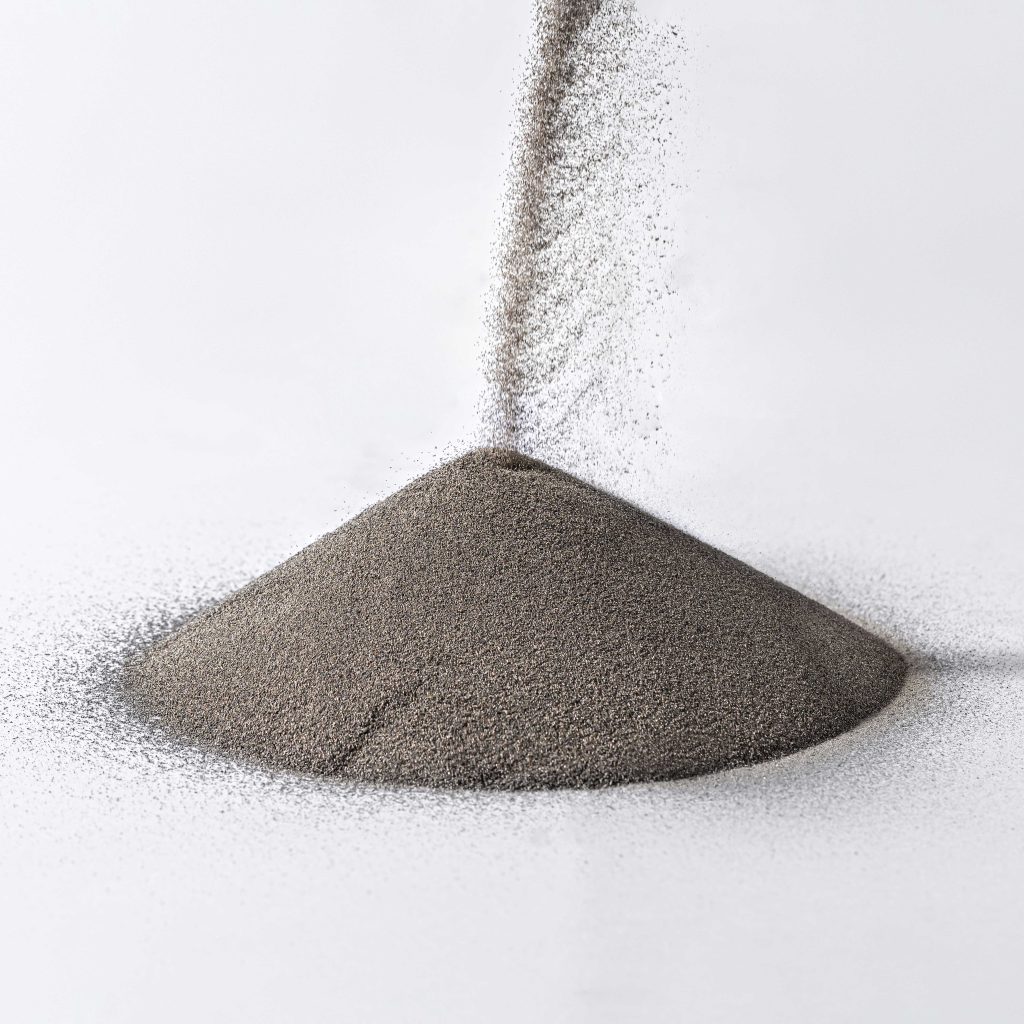
Nickel powder plays an important role in the production of many welding consumables. It can help manufacturers achieve the required alloy chemistry, corrosion resistance, toughness, and performance in demanding welding applications.
But buying nickel powder is not simply about choosing a high purity material. The right product depends on particle size, morphology, chemical composition, production process, and the specific requirements of the welding consumable.
For buyers, this makes material selection more important than it may initially seem. A powder that works well in one formulation may create problems in another.
This guide explains how industrial buyers can evaluate nickel powder more practically. Instead of focusing only on standard specifications, it looks at how the powder behaves during manufacturing and how to choose a grade that fits the final application.
Why Nickel Powder Selection Is More Complicated Than It Looks
At first, nickel powder may appear to be a straightforward raw material. However, several small differences between products can influence manufacturing performance.
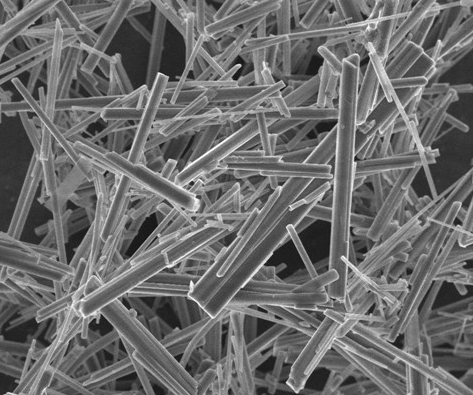
Two powders can have similar nickel purity but behave differently during blending or feeding. Their particle size distribution, particle shape, density, and surface characteristics may not be the same.
This is why buyers should avoid selecting nickel powder from a single specification.
A better approach is to look at the complete material profile and ask one important question:
Will this powder work consistently in our actual welding consumable production process?
That question shifts the focus from purchasing a commodity to selecting a functional raw material.
The Nickel Content You Actually Need
Nickel purity deserves attention, but maximum purity is not always the smartest purchasing decision.
A manufacturer should determine how much nickel is required in the final formulation and what impurity levels can be tolerated.
For example, if the welding consumable requires tight control over alloy chemistry, a higher purity grade may provide better formulation control. In another application, a slightly different commercial grade may offer adequate performance at a lower cost.
When defining nickel chemistry requirements, buyers can also refer to AWS nickel and nickel alloy welding specifications for established requirements related to nickel and nickel alloy welding electrodes and rods.
The important point is to define the required chemical specification before comparing supplier quotations.
Fine Powder or Coarser Powder: Which Makes More Sense?
Particle size is one of the specifications that can directly affect powder handling.
Very fine nickel powder can provide good distribution within certain mixtures, but it may also present greater challenges during handling and storage.
Coarser powder may offer different flow and packing characteristics. The best choice depends on the production equipment and formulation.
A practical way to evaluate particle size is to look at three areas:
- Mixing: Will the powder distribute evenly with the other ingredients?
- Feeding: Can the powder move consistently through the production equipment?
- Final formulation: Does the selected size support the required composition and manufacturing process?
The answer to these questions is more useful than simply choosing the finest available powder.
How Nickel Powder Behaves During Mixing and Processing
A powder can meet the chemical specification and still cause manufacturing difficulties.
During production, nickel powder may need to be mixed with several other powdered materials. If the powder has inconsistent particle characteristics, it may affect blending uniformity.
This can become more noticeable when production moves from laboratory quantities to larger commercial batches.
The practical evaluation should therefore consider:
- Powder flow:Does it move consistently through the equipment?
- Blend uniformity:Does it distribute properly with other ingredients?
- Segregation: Does the mixture remain uniform during handling?
- Feeding behavior: Can the production line maintain a stable feed rate?
- Repeatability: Does the powder behave similarly from batch to batch?
These factors can have a direct effect on production efficiency.
Matching Powder Characteristics With Different Welding Needs
Different welding environments place different demands on the consumable.
| Welding Requirement | Nickel Powder Consideration | Main Reason |
| Corrosion resistance | Controlled nickel chemistry | Supports alloy performance |
| High temperature service | Consistent alloying quality | Helps maintain intended composition |
| Precise alloy formulation | High chemical consistency | Reduces formulation variation |
| Automated powder feeding | Controlled morphology and flow | Supports stable feeding |
| Fine powder blending | Suitable particle distribution | Improves mixing behavior |
| Large scale production | Strong batch consistency | Reduces production variation |
| Specialized formulations | Custom specifications | Supports specific requirements |
For additional guidance on nickel alloy welding requirements, buyers can consult the AWS guide for joining nickel based alloys, which covers joining considerations for different wrought nickel based alloys.
The purpose of this comparison is not to select a powder automatically. Instead, it helps buyers identify which properties deserve the most attention for their application.
What a Good Nickel Powder Specification Should Look Like
A useful specification should be detailed enough that different suppliers are quoting against the same requirements.
Instead of writing only “high purity nickel powder,” buyers should define the important characteristics.
A stronger specification might include:
- Material: Nickel Powder
- Nickel Content: Required minimum
- Particle Size: Defined micron or mesh range
- Particle Distribution: Agreed specification
- Morphology: Required or acceptable type
- Impurity Limits: Defined maximum values
- Apparent Density: If relevant to production
- Packaging: Required weight and format
- Documentation: COA, SDS, and technical data
This makes supplier comparisons much more meaningful.
Sample Testing: The Step Buyers Often Skip
A sample should not be judged only by appearance.
For industrial purchasing, the most useful test is normally performed under conditions that resemble actual production.
When evaluating a welding consumable formulation, buyers can use nickel alloy welding consumable selection guidance from AWS as an additional technical reference when comparing suitable filler metal options
A Practical Testing Sequence
- Check the chemical composition against the required specification.
- Measure or verify the particle size distribution.
- Examine powder morphology when relevant.
- Test flow and handling characteristics.
- Blend the powder using the intended formulation.
- Observe feeding, mixing, and processing behavior.
Evaluate the finished welding consumable against the required performance criteria.
This approach provides much stronger evidence than approving a supplier based only on a datasheet.
How to Read a Nickel Powder Test Report
A certificate of analysis can look technical, but buyers should focus on the information that affects their process.
First, check whether the reported nickel content meets the agreed specification.
Next, compare impurity levels with your internal limits. Do not assume that a low total impurity level means every individual element is acceptable.
Then review the physical data. If particle size is important to your process, confirm that the reported distribution matches the purchased grade.
Finally, check the batch or lot identification.
This allows the test report to be connected with the actual material being supplied.
Buyers should also compare supplier test documentation with applicable AWS nickel alloy welding standards to ensure that relevant chemical and product requirements are properly considered.
Red Flags That Can Point to a Weak Supplier
Some warning signs deserve attention before a purchase becomes a long term supply relationship.
Vague Specifications
If a supplier cannot clearly define particle size, purity, or impurity limits, comparison becomes difficult.
No Batch Information
A professional supplier should be able to identify the material supplied and provide relevant batch documentation.
Sample and Production Material Differ
A sample should represent the grade that will actually be supplied commercially.
Unclear Production Capability
If a supplier cannot explain whether they can maintain your required quantity and specification, long term supply may become risky.
Price Is the Only Selling Point
Competitive pricing matters, but technical support, consistency, documentation, and reliability matter too.
Related Resources for Nickel Powder and Welding Consumables
Explore our related guides to learn more about nickel powder applications, welding consumables, alloy selection, and the factors that influence welding performance.
Ferro Tungsten Powders for Wear-Resistant Applications in Australia
Choosing the Right Metal Coating Powders Supplier for Industrial Use
Ferro Vanadium Powder in Steel Production: China’s Industrial Edge
Chromium Carbide Powder for Surface Protection: Middle East Applications
High-Carbon vs Low-Carbon Ferrochrome Powders: China Export Insights
Why Metal Powder is Essential for Additive Manufacturing?
Global Demand for Chromium Carbide Powder in Heavy Industries
2026 Industry Guide: Top 7 Best Iron Powder Manufacturers in China for Global Buyers
Silicon Powder Applications in Electronics and Alloys: Made in China
Global Export of Metal Powders from Chengdu China
Final Takeaway
Choosing nickel powder for welding consumables is ultimately about finding the right balance between chemical quality, physical characteristics, processing behavior, and commercial reliability.
There is no single nickel powder specification that is ideal for every welding application. The correct choice depends on the consumable formulation, production equipment, required weld performance, and acceptable material cost.
For buyers, the safest strategy is to define the specification clearly, test samples under realistic conditions, review supplier documentation, and evaluate batch consistency before committing to regular orders.
A good nickel powder supplier should not simply provide a material. They should be able to provide consistent quality, clear technical information, dependable supply, and support when your production requirements change.
자주 묻는 질문
Q1: What type of nickel powder is best for welding consumables?
Answer: The best nickel powder depends on the consumable formulation, required alloy composition, particle size, purity, morphology, and production process. Buyers should select powder according to application requirements.
Q2: How does nickel purity affect welding consumable performance?
Answer: Nickel purity affects alloy composition and consistency. Higher purity can reduce unwanted impurities and provide better control over welding consumable chemistry, especially for demanding industrial applications.
Q3: What particle size of nickel powder should welding manufacturers choose?
Answer: Manufacturers should choose particle size according to their mixing, feeding, and processing equipment. Fine or coarse powder may be suitable depending on formulation requirements and production conditions.
Q4: Why is particle morphology important when selecting nickel powder?
Answer: Particle morphology influences powder flow, packing, and mixing behavior. Spherical and irregular particles can perform differently, so buyers should consider morphology when consistent processing and automated feeding are important.
Q5: Which impurities should buyers check in nickel powder?
Answer: Buyers should review carbon, sulfur, oxygen, iron, copper, cobalt, and other specified impurities. Their acceptable limits should match the chemical requirements of the final welding consumable.
Q6: How does nickel powder improve welding consumable properties?
Answer: Nickel powder can contribute to corrosion resistance, toughness, heat resistance, and controlled alloy chemistry. Its exact effect depends on the overall formulation and intended welding application.
Q7: Should buyers test nickel powder samples before placing bulk orders?
Answer: Yes, sample testing helps buyers evaluate chemical composition, particle size, flowability, mixing behavior, and processing performance before committing to larger quantities or long term supply agreements.
Q8: What documents should buyers request from a nickel powder supplier?
Answer: Buyers should request a technical data sheet, certificate of analysis, safety data sheet, particle size information, packaging details, and relevant quality documentation before approving regular purchases.
Q9: How can manufacturers compare different nickel powder suppliers?
Answer: Manufacturers should compare purity, particle characteristics, batch consistency, testing results, production capacity, documentation, lead time, pricing, packaging, and technical support rather than considering purchase price alone.
Q10: What factors affect the cost of nickel powder for welding consumables?
Answer: Nickel purity, particle size, production method, order quantity, customization, packaging, market conditions, and supplier location can all influence the final cost of nickel powder.