 Korean
 English
 French
 Japanese
 Spanish
 Vietnamese
 Thai
 Portuguese
 German

Modern electronics, from smartphones to electric vehicles, constantly emit and receive electromagnetic waves. When these waves interfere, they cause signal loss, noise, and system failures, a problem known as electromagnetic interference (EMI). As devices get smaller and faster, effective EMI shielding has become essential for performance, safety, and compliance.
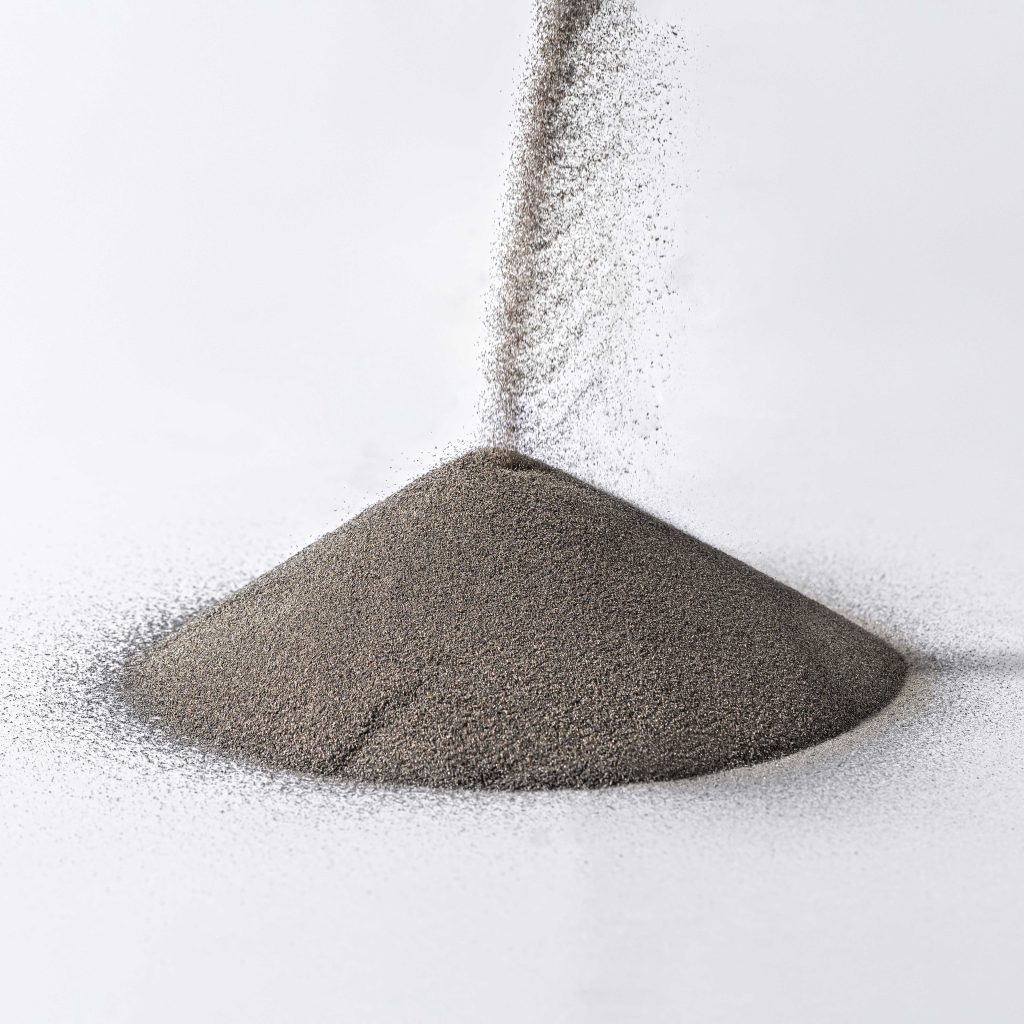
Carbonyl iron powder (CIP) is one of the most effective materials for this job. Made by decomposing iron pentacarbonyl, it consists of fine, pure, spherical iron particles, typically 1 to 10 microns in size. Its high magnetic permeability and low losses let it absorb electromagnetic energy efficiently across the MHz to GHz range, and it blends easily into polymers, rubbers, and coatings.
In this blog, we will look at the key properties of carbonyl iron powder and how they affect shielding performance. We will then explain how CIP works in EMI shielding and cover its main applications in telecommunications, automotive, aerospace, and consumer electronics.
What Is Carbonyl Iron Powder?
Carbonyl iron powder is a very fine, high-purity iron powder. It is made by first reacting iron with carbon monoxide to form liquid iron pentacarbonyl, Fe(CO)₅. This liquid is purified by distillation and then heated in a decomposer. The compound breaks down into iron and carbon monoxide, and the iron condenses into tiny, uniform particles. The carbon monoxide is captured and reused in the process.
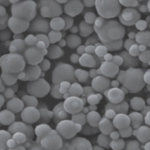
This route is very different from atomization or mechanical grinding. Because the iron is rebuilt from a purified gas-phase compound, the product is exceptionally clean and consistent. Typical particles are spherical and usually a few micrometers in diameter. Under an electron microscope, many particles show a layered, onion-like internal structure formed as iron builds up around each growing particle.
Manufacturers usually offer two broad families of CIP:
- Hard (unreduced) grades: These retain small amounts of carbon, nitrogen, and oxygen from the decomposition process. They are mechanically robust and widely used in powder metallurgy and magnetic cores.
- Soft (reduced) grades:These are treated with hydrogen to remove most of the carbon, nitrogen, and oxygen. The result is a purer iron powder with better magnetic softness, and it is often preferred in electromagnetic applications.
Key Properties of Carbonyl Iron Powder
Understanding these properties is important because they directly decide how well CIP absorbs electromagnetic energy, how easily it can be processed, and which application it is best suited for.
1. High purity
Depending on the grade, iron content is commonly above 97 percent and can exceed 99 percent in reduced grades. Low levels of impurities matter because contaminants disturb the crystal lattice and reduce magnetic performance. For absorbers that must perform consistently across thousands of units, this cleanliness is a major advantage.
2. Fine, spherical particles
Spherical morphology and a narrow size range make CIP easy to disperse evenly in polymers, rubbers, paints, and adhesives. Uniform dispersion prevents weak spots in a shielding layer and helps keep electromagnetic properties predictable from one batch to the next. The small particle size also keeps the powder below the skin depth of iron at typical operating frequencies, a point explained later in this article.
3. High saturation magnetization
Iron has one of the highest saturation magnetization values among common magnetic materials, about 2.1 tesla. A material that can carry a lot of magnetic flux before saturating is well suited to absorbing strong or wideband electromagnetic energy. This is one reason CIP outperforms many ferrite powders in high-power or high-field environments.
4. Good magnetic permeability
CIP has a relatively high initial permeability for a powder, which allows it to interact strongly with the magnetic component of an electromagnetic wave. This is the property most directly linked to absorption.
5. Low coercivity in soft grades
Soft CIP magnetizes and demagnetizes easily. This gives an efficient response at high frequencies and less energy stored as residual magnetism, which is exactly what a good absorber needs.
6. Compatibility with many matrices
CIP can be mixed into silicone, epoxy, polyurethane, acrylic, polyethylene, nitrile rubber, and many other binders. It can also be surface-coated with silica, phosphate, or polymer layers to improve insulation, oxidation resistance, and dispersion. This flexibility lets manufacturers build products in many forms, including sheets, films, pastes, foams, and molded parts.
EMI Shielding and Absorption: A Quick Primer
Understanding electromagnetic compatibility (EMC) and mitigation guidelines helps engineers evaluate electromagnetic interference risks and select suitable solutions for electronic systems.
A shielding solution can deal with it in three ways:
- Reflection: The barrier bounces the wave back. Conductive metals such as copper and aluminum excel here.
- Absorption: The barrier converts electromagnetic energy into small amounts of heat. Magnetic and dielectric-loss materials do this.
- Multiple internal reflections:Waves bounce inside the material and lose energy along the way.
Reflection alone is sometimes a problem. A reflective shield can send interference to another component or create standing waves and cavity resonances inside an enclosure. In dense electronics, absorption is often the better strategy, and this is where CIP is most valuable.
Absorption performance is usually described with reflection loss (RL), measured in decibels. A reflection loss of −10 dB means about 90 percent of the incident energy is absorbed, and −20 dB means about 99 percent. The bandwidth over which a material stays below −10 dB is called its effective absorption bandwidth.
Two material properties drive these results: complex permittivity, which describes how the material responds to the electric field, and complex permeability, which describes how it responds to the magnetic field. The imaginary parts of each represent losses. CIP contributes mostly through magnetic loss, and it also adds some dielectric loss.
Why CIP Works So Well for EMI Applications
Multiple magnetic loss mechanisms
When an alternating electromagnetic field passes through a CIP-filled material, several loss processes convert its energy into heat:
- Natural resonance:Magnetic moments inside the particle precess at a characteristic frequency and absorb energy near it.
- Domain wall movement: At lower frequencies, walls between magnetic domains shift and lose energy through friction.
- Eddy currents: Alternating fields induce small circulating currents. In a large metallic piece these would push the wave away, but in tiny, separated particles they contribute to controlled absorption.
- Interfacial polarization:Charges accumulate at boundaries between iron particles and the polymer, adding dielectric loss.
The combination of magnetic and dielectric losses gives CIP composites a broad and tunable response.
Small particle size limits skin effect
At high frequencies, currents flow only in a thin outer layer of a conductor, called the skin depth. If a particle is much larger than that depth, the wave cannot penetrate it, and the particle behaves like a mirror. Micron-scale CIP particles are small enough for the field to penetrate meaningfully, which keeps permeability effective well into the gigahertz range.
Better impedance matching
For a material to absorb a wave instead of reflecting it, its impedance must be close to that of free space. Pure metals have very high conductivity and reflect. When CIP particles are separated by a polymer, the composite has much lower effective conductivity and moderate permeability, which brings its impedance closer to the ideal. More energy enters the material and gets absorbed instead of bouncing off the surface.
Tunable performance
Engineers can adjust CIP composites in several ways: particle size, loading level, coating, shape, and layer thickness. Loading of 60 to 85 percent by weight is common in absorber sheets, although the right figure depends on the binder and target frequency. Thickness can be chosen to place the absorption peak where it is needed, following the quarter-wavelength matching principle.
Overcoming Snoek’s limit with flake shapes
Spherical magnetic particles face a trade-off known as Snoek’s limit: higher permeability generally means a lower resonance frequency. Flattening the particles into flakes, usually by ball milling, introduces shape anisotropy. This pushes the resonance to higher frequencies while keeping useful permeability, and it makes flaky CIP popular for thin, high-frequency absorbers.
How Does CIP Compare With Other EMI Materials?
No single material solves every interference problem, so it helps to see where CIP fits.
1. Compared with Ferrites
Ferrite powders are excellent at lower megahertz frequencies and have high resistivity, but their saturation magnetization is much lower than iron’s. CIP handles stronger fields and offers useful permeability at higher frequencies, especially in flake form. Many designs use both to cover a wider range.
2. Compared with Carbon-based Fillers
Carbon black, graphite, carbon nanotubes, and graphene provide dielectric loss and conductivity at low weight. They are light, but they rely mostly on electric losses and often struggle with impedance matching on their own. Adding CIP brings magnetic loss into the mix.
3. Compared with Pure Conductive Metals
Copper, aluminum, and silver-coated fillers give strong reflection-based shielding. They are ideal for blocking signals but not for absorbing them. CIP composites suppress noise inside enclosures where reflection would cause new problems.
4. Compared with Other Magnetic Metal Powders
Powders such as Sendust, FeSiAl, and amorphous or nanocrystalline alloys are also used in EMI absorbers. Each has its own balance of permeability, loss, and cost. CIP stands out for its purity, small spherical particles, and easy dispersion.
Applications of CIP in EMI Shielding and Absorption
Knowing where CIP is used shows how its properties translate into real-world solutions across industries that depend on reliable, interference-free electronics.
1. Microwave and radar absorbing materials
CIP is a classic ingredient in radar absorbing materials (RAM). Coatings and sheets loaded with CIP reduce the reflection of radar signals from surfaces, helping lower the radar signature of vehicles and installations. It is also used inside anechoic chambers, where absorbers keep test environments free of stray reflections.
2. Absorber sheets for consumer electronics
Smartphones, tablets, laptops, and wearables pack antennas, processors, memory, and power circuits into very small spaces. Thin flexible sheets of CIP dispersed in silicone or polymer film can be placed over noisy chips or between modules. They suppress near-field coupling and reduce noise without adding much weight or thickness.
3. Wireless charging and NFC
Magnetic sheets are used behind wireless charging coils and NFC antennas to direct the magnetic field, prevent losses in nearby metal, and protect surrounding circuits. Soft magnetic powders such as CIP can be part of these formulations, particularly where flexibility and high-frequency behavior are important.
4. Automotive electronics
Modern vehicles include radar sensors, infotainment systems, battery management units, motor drives, and charging equipment. These generate a great deal of electromagnetic noise across a wide range. CIP-based gaskets, potting compounds, and absorbers help maintain signal integrity for safety-critical systems such as advanced driver assistance and vehicle-to-everything communication.
5. 5G and telecommunications equipment
Base stations, antenna modules, and networking hardware operate at higher frequencies and higher densities than earlier generations. CIP-loaded absorbers reduce resonances inside enclosures and cut crosstalk between components. Their behavior in the GHz range makes them a natural fit.
6. EMI gaskets, sealants, and coatings
CIP can be blended into elastomers to create gaskets that both seal enclosures and provide magnetic loss. In paints and coatings, it can create thin absorbing layers on housings, cavity walls, and cable shields. Some designs combine CIP with conductive fillers such as silver-coated particles or carbon materials to get both reflection and absorption.
7. Cable and connector shielding
Ferrite-like suppression can be built into cable jackets and connector housings by loading polymers with magnetic powders. CIP-filled compounds can absorb high-frequency noise that travels along cables and radiates from them.
8. Hybrid absorbers
Researchers and manufacturers often combine CIP with other materials to widen bandwidth or reduce weight:
- CIP and carbon nanotubes or graphene:These add dielectric loss and conductive networks, giving strong absorption at lower filler loading.
- CIP and ferrites:Ferrites work well at certain frequency ranges, and CIP fills the gaps.
- Core-shell CIP:Coating iron particles with silica, polymer, or oxide layers improves insulation, reduces eddy currents, and boosts oxidation resistance.
Factors to Consider When Formulating With CIP
- Particle size and distribution:
Smaller particles push useful performance to higher frequencies, while larger ones often deliver higher permeability at lower frequencies. A narrow distribution gives more predictable behavior.
- Morphology:
Spherical grades suit general absorbers, and flaky or plate-like grades suit thin, high-frequency products.
- Purity and oxygen content:
Excess oxygen, carbon, or nitrogen alters magnetic properties. For high-performance absorbers, reduced grades are usually the better choice.
- Loading level:
More filler increases permeability and loss, but it also makes the composite heavier, stiffer, and more expensive. Too much filler can also raise conductivity and hurt impedance matching. Finding the right balance requires testing.
- Surface treatment:
Coatings help separate particles, improve wetting by the binder, and slow corrosion.
- Binder choice:
Silicone gives flexibility and temperature stability. Epoxy gives rigidity and strength. Polyurethane and rubber offer good elasticity.
- Thickness:
Absorption peaks depend on the thickness of the layer, so the design should be matched to the frequency band that needs to be attenuated.
- Environmental conditions:
Heat, humidity, and salt exposure can corrode uncoated iron. Protective coatings and suitable binders extend the life of an absorber.
Advantages and Limitations of Carbonyl Iron Powder in EMI Shielding
Advantages
- Strong absorption: High permeability and magnetic loss provide effective attenuation across the MHz to GHz range.
- Thin and flexible:Composites can be made as thin sheets or films suitable for compact devices.
- Easy integration: CIP works with many polymers and manufacturing methods, from molding to coating.
- Consistent quality: Spherical particles and high purity give reliable, repeatable results.
- Tunable performance: Particle size, shape, loading, and thickness can all be adjusted for a specific frequency band.
- Electrically insulating composites:Properly designed CIP composites reduce the risk of short circuits.
Limitations
- Weight: Iron is dense (about 7.87 g/cm³), so highly loaded composites can be heavy, which matters in aerospace and portable devices.
- Corrosion:Uncoated iron can rust, especially in humid or chemically aggressive environments, so protective treatment is often necessary.
- Limited bandwidth: A single CIP absorber tends to work best over a limited frequency range, and permeability drops at higher frequencies.
- Cost: High-purity CIP is generally more expensive than ordinary iron powders or ferrites, though its performance can justify the price.
- Handling considerations: As with any fine metal powder, proper handling and dust control are needed in manufacturing.
To overcome the bandwidth limitation, manufacturers often combine CIP with other materials such as ferrites, carbon black, graphene, or carbon nanotubes. These hybrid composites use both magnetic and dielectric loss, widening the range of frequencies they can absorb.
Testing and Verifying EMI Performance
Good formulation on paper still needs confirmation in the lab. Several methods are common:
- Coaxial airline or waveguide measurements:A vector network analyzer measures the complex permittivity and permeability of a sample, which can then be used to calculate reflection loss for different thicknesses.
- Free-space (arch) testing: A flat panel is illuminated by an antenna, and the reflected signal is compared with a metal reference plate. This method is widely used for radar absorbers.
- Near-field scanning: Probes map the field above a circuit board with and without an absorber, showing how well noise is reduced at the source.
- Shielding effectiveness tests:Shielding effectiveness tests measure how effectively an enclosure, gasket, or shielding material reduces electromagnetic transmission.
Testing at several loadings and thicknesses early in development saves time and cost later, and it gives a clear picture of the trade-off between performance and weight.
Engineers can consult IEEE standards and technical resources to identify relevant testing methods and applicable requirements for their specific applications.
Handling, Storage, and Safety
Fine iron powders need sensible handling. Because they have a large surface area, they can oxidize over time and, under the wrong conditions, form combustible dust clouds. Good practice includes:
- Storing powder in sealed containers in a dry, cool place
- Avoiding dust generation and sources of ignition
- Using grounded equipment and appropriate ventilation
- Wearing dust masks, gloves, and eye protection
- Following the supplier’s safety data sheet and local regulations
Careful handling protects workers and also preserves the quality of the powder.
Choosing the Right CIP Supplier
Material performance in EMI applications depends heavily on consistency. A good supplier should be able to provide:
- Clear specifications for particle size, chemistry, and density
- Stable batch-to-batch quality with test reports
- Options for different grades, sizes, and surface treatments
- Technical support for formulation questions
- Reliable packaging, lead times, and export experience
Working with a manufacturer that has its own powder processing capabilities makes it easier to get the right grade for a specific frequency band or product design.
Chengdu Jinchun Metallic Materials Co., Ltd., a metal powder manufacturer founded in 2012, offers a range of absorbing metal materials backed by in-house processing capabilities such as reduction, milling, magnetic separation, and spheroidization.
Engineers and buyers with specific EMI requirements can contact the team to discuss suitable powder options.
Related Metal Powder Guides
Understanding carbonyl iron powder also requires knowledge of other magnetic and functional metal powders used in industrial applications. Explore these related guides to learn more about metal powder properties, material selection, and specialized applications.
Top 10 Metal Powder Manufacturers in China
How To Select Ferro Chrome Powder?
Ferro Vanadium VS Ferro Niobium: 7 Key Differences
Price of Silicon Metal: Market Factors and Global Supply Insights
Chromium Carbide Price: What Drives Global Market Value?
High Carbon vs Low Carbon Ferrochrome Powder: Differences, Applications, and Selection Guide
Choosing the Right Nickel Powder for Welding Consumables: A Complete Buyer’s Guide
Pure Silicon Metal Powder vs Silicon Alloy Powder: Key Differences and Industrial Uses
Magnesium Powder Price Guide: Factors That Affect Industrial Costs
Final Thoughts
Electromagnetic interference is a growing challenge in a world of faster, smaller, and more connected devices. Carbonyl iron powder addresses it with a useful combination of high purity, fine spherical particles, high magnetic permeability, and low eddy current losses. Instead of simply reflecting unwanted waves, CIP-based materials absorb their energy, making them well suited to compact, high-frequency electronics.
While challenges such as weight, corrosion, and limited bandwidth remain, careful design, protective coatings, and hybrid materials continue to improve its performance. From telecommunications and automotive systems to aerospace, medical devices, and wireless charging, carbonyl iron powder is already an important part of reliable EMI shielding, and its role is likely to grow as technology advances.